

Finally master the American /ɛr/ sound! This guide explains the ‘EH→RRR’ glide, solves the ‘care’ vs ‘car’ problem, and fixes common pronunciation mistakes
Hey pronunciation pioneers! Get ready to clear the air on a sound that’s absolutely everywhere in American English, but often leaves learners feeling totally up in the air /ɛr/! We’re talking about the sound in words like “chair**”, “care**”, “there**”, “where**”, or even – get this – “parent” and “marry“! Its phonetic secret code is /ɛr/ (think “EH-RRR”), and it’s another crucial R-Colored Diphthong!
Now, why does this sound cause so much trouble?
- The “EH” Start: Many learners aren’t sure which “E” sound to start with. Is it like the “ee” in “see”? Or the “eh” in “bed”? Get this wrong, and your “share” /ʃɛr/ (compartir) might sound like “sheer” /ʃɪr/ (puro)! [Implied confusion by need to define /ɛ/ clearly].
- That American “RRR”! Oh, that American R! If it’s not smooth and continuous (and instead tapped or trilled like in some other languages), your “care” /kɛr/ sounds very different.
- The SMOOTH GLIDE: It’s not “EH… (pause)… RRR”. It’s a smooth slide: “EH→RRR”. Many learners make two choppy sounds.
- And the ABSOLUTE CRAZIEST PART? The SPELLING! Hold onto your hats: the MOST COMMON way to spell this /ɛr/ “AIR” sound is with the letters ‘AR’! Yes, you read that right! Words like “scare“, “parent”, “aware” all use ‘AR’ for /ɛr/! Mind. Blown. 🤯 This makes learners think “car” /kɑr/ when they should be thinking “care” /kɛr/! Add in ER, AIR, EAR, EIR, ERR… it’s a spelling carnival!
You try to ask “Where** /wɛr/ is the bear /bɛr/?” and it all comes out a jumble! You feel like English spelling is just one big practical joke!
But DON’T despair! Today, we’re making the /ɛr/ sound CRYSTAL CLEAR! This ultimate EASY-MODE guide (seriously, your 8-year-old nephew could explain it after this!) will make you an /ɛr/ champion:
- Meet the “EH-RRR Super-Slide” /ɛr/: What exactly is this “AIR” R-Colored Diphthong?
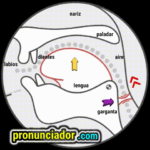
- Mouth Gymnastics (Simplified!): Step-by-step EASY instructions for your jaw, lips, and tongue – the EH position, the RRR position, and the magic GLIDE between them!
- The “AR = AIR” Mystery SOLVED: Why “scare” /skɛr/ doesn’t rhyme with “car” /kɑr/!
- Sound Battle Royale! No more mixing up /ɛr/ (hair) with /ɪr/ (hear) or /ɑr/ (hard) or /ɝ/ (her)! Critical contrasts made simple!
- Crazy Spellings UNMASKED! AR, ER, AIR, EAR, EIR, URR… We’ll show you the most common ones and when to watch out!
- Zap Common “AIR-Head” Errors! Stop that foreign R and get your starting “EH” perfect!
- “Care to Share?” Practice Power! Awesome drills and essential words (‘there’, ‘where’, ‘very’, ‘parent’, ‘hair’, ‘air’, ‘share’, ‘marry’) to make your /ɛr/ totally natural!
Get ready to finally understand and nail words like “there,” “care,” “share,” “parent,” and “American”! Your pronunciation of these super-frequent words is about to get a serious upgrade! Let’s take to the air /ɛr/! ✈️

What is This /ɛr/ “AIR” Sound? (The “Short E + American R” Glide!)
Let’s get formally introduced. The /ɛr/ sound is one of the magnificent seven R-Colored Vowel sounds in American English. “R-Colored” is just a fancy way of saying the American /r/ sound and the vowel before it melt together to become ONE special, blended sound. The R “colors” the vowel!
Specifically, /ɛr/ is often called an R-Colored Diphthong.
“Diphthong” means your mouth MOVES from one vowel shape to another within a single syllable.
The /ɛr/ “AIR” Glide: Starting with “EH” /ɛ/ and Moving to “RRR” /r/
This is the simple secret:
- The Starting Vowel – Relaxed “EH” /ɛ/: Your mouth begins by making the Short E /ɛ/ sound. This is the “eh” sound you hear in words like “bed,” “red,” or “get.” It’s made with your tongue mid-to-low and forward in your mouth, and your lips are relaxed, maybe slightly spread.
- The Destination – The American R /r/: From that “EH” position, your mouth smoothly transitions into making the American R /r/ sound. This means your lips will usually round a bit, and your tongue will get TENSE and either curl its tip back (Retroflex R) or bunch up its body in the back (Bunched R) – always without tapping or trilling!
The Super-Easy Formula for the “Chair” Sound /ɛr/:
/ɛr/ = Start with RELAXED SHORT “EH” /ɛ/ (Tongue Mid-Low/Front, Lips Slightly Spread/Relaxed) → GLIDE SMOOTHLY as LIPS ROUND & TONGUE moves to AMERICAN R /r/ (Tense, Curled/Bunched)
It’s one continuous, flowing “Ehhhhhhhhh-rrrrrrrrr” – it’s not “EH… (stop)… RRR.” It’s a seamless transition!
CRITICAL Sound Battles: Keep Your /ɛr/ “AIR” Pure!
Confusing /ɛr/ with other R-colored vowels is a common trap! The starting vowel is your North Star.
- /ɛr/ (hAIR, thERE) vs. /ɪr/ (hEAR, thIR – no word!): “EH” start vs. “IH” start!*
- /ɛr/ (hAIR): Starts with Short E /ɛ/ (“bed”). Tongue MID-LOW & FRONT. Jaw MORE OPEN. Lips relaxed/slightly spread.
- /ɪr/ (hEAR): Starts with Short I /ɪ/ (“kid”). Tongue HIGH & FRONT. Jaw MORE CLOSED. Lips relaxed/neutral or very slight spread.
- The BIG Mix-Up: Saying “hear” when you mean “hair,” or “deer” (animal) for “dare” (to challenge).
- Listen & Feel the START: Is your tongue mid-low for EH or high for IH before the R kicks in?
- /ɛr/ (cARE) vs. /ɑr/ (cAR): “EH” start vs. “AH” start!
- /ɛr/ (cARE): Starts with Short E /ɛ/. Tongue FRONT. Lips relaxed/spread.
- /ɑr/ (cAR): Starts with Broad A /ɑ/ (“father”). Tongue BACK & LOW. Lips NEUTRAL.
- The BIG Mix-Up: Especially with ‘AR’ spelling! Saying “car” (vehicle) for “care” (to look after), or “share” like “shar-” (as in shark /ʃɑrk/, which then becomes another sound if you add k!).
- Listen & Feel: /ɛr/ is a FRONT vowel sound gliding to R. /ɑr/ is a BACK vowel sound gliding to R. Very different start!
- /ɛr/ (pAIR) vs. Stressed ER /ɝ/ (pURR): “EH” glide vs. Tense “ERRR”
- /ɛr/ (pAIR): Diphthong EH→RRR. Starts with tongue front /ɛ/.
- /ɝ/ (pURR): Monophthong. ONE TENSE sound. Tongue MID/CENTRAL + R from the start.
- The BIG Mix-Up: Making /ɛr/ too tense and central, or not having that clear /ɛ/ start. Your “bear” might sound like “burr” (a prickly seed).
- Listen & Feel: /ɛr/ has a clear “EH” flavor before the R. /ɝ/ is just “ERRRR” from the get-go.
Key to /ɛr/: It clearly begins with that “EH” /ɛ/ sound, and then your mouth moves into the R.

Your Mouth’s “EH→RRR” Adventure: Making /ɛr/ (AIRPLANE Easy!)
Let’s master this “EH-to-RRR” glide with super simple steps!
Step 1: The “EXCELLENT EH” Start! (Position for Short E /ɛ/)
- Mouth Partially Open (Like a Soft “Eh”): Not super wide, not closed. Relax your jaw and let it drop just a bit, a comfortable mid-opening.
- Lips – Relaxed Mini-Spread (Or Neutral): You can stretch the corners of your lips out to the sides a little, like a very soft, unforced smile. Crucially, KEEP THEM RELAXED. No tension!
- Tongue – Forward & Mid-Low (But Lazy!):
- Let your tongue be RELAXED.
- The main body of your tongue should be pushed forward in your mouth.
- The front/middle of the tongue should be at a mid-low height – think below the true middle line, but not flat on the bottom.
- The very tip of your tongue can lightly rest behind your bottom front teeth.
This is your starting block: the relaxed Short E /ɛ/ (like in “bed,” “get”)!
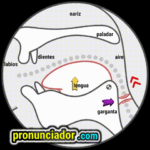
Step 2: The Smooth “RRR”merican Finish! (Adding the /r/)
Now, here’s the glide! While your voice is still going from the “EH”…
- Jaw Closes a Little (Subtle!): Your jaw might come up just a tiny bit as you prepare for the R.
- Lips ROUND for the R! This is a key change! From that relaxed, slightly spread position, your lips now gently round and may push out slightly, like you’re about to say “oooh” or sip through a straw.
- Tongue TENSES and Gets into “R” Gear! Now your tongue does the American R magic (choose your R-style!):
- Retroflex R (Curled Tip): The tip of your tongue TENSES and CURSLS UP and BACK towards that bumpy part behind your top teeth (or even a bit past it). It should NOT touch the roof!
- Bunched R (Humped Body): Keep your tongue tip down. TENSE the body/middle of your tongue and PULL/BUNCH it UP and BACK high towards the roof of your mouth. Sides often touch upper back teeth.
- For both: TONGUE IS TENSE, AIR FLOWS, NO TAPPING/TRILLING!
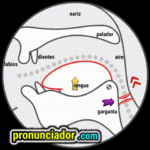
Step 3: The “EH-RRR” Master Blend! = /ɛr/ “AIR”!
The /ɛr/ is ONE smooth, connected glide, not two separate sounds (“EH… (pause)… RRR”). It’s a seamless transition!
- Start by making the relaxed Short E “EH” /ɛ/ sound.
- Keep your voice going, and let your lips smoothly round as your tongue elegantly transitions into that TENSE American R position.
- It’s one flowing sound: “Ehhhhhhhhh-rrrrrrrrr” –> /ɛr/ –> “AIR!”
- Just like other diphthongs, the “EH” /ɛ/ starting part is often a bit louder and longer than the R-coloring it glides into. The “EH” is the flavor-starter.
Kid-Friendly “Bear” Cue: “Imagine you’re saying ‘EH?’ like you’re a bit surprised or asking a question (mouth open a bit, lips a little smiley). Then, right away, make your tongue strong and pull it back like a grizzly bear getting ready to ROAR ‘RRR!’ (but don’t actually roar, just make the R sound!). Put it together fast: EH-RRR! Like ‘bear‘!”
Feeling Check: Tongue starts mid-low/front & relaxed for “EH” (lips slightly spread)? Then, does it smoothly pull back/tense & lips round for the “RRR” without any hiccup or tongue-tapping? You’re rocking the /ɛr/!
The “AIR” /ɛr/ Spelling Game: AR, ER, AIR, EAR?! (Decoding the Madness!)
Hold on tight, because the way this /ɛr/ “AIR” sound is spelled is probably one of the most counter-intuitive and confusing things in all of English pronunciation for many learners!
The SHOCKING Champion: ‘AR’ Spells “AIR” /ɛr/ MOST OFTEN! (~48%-49%)
Yes, you are reading this correctly! According to Sounds American data, the letter combination ‘AR’ is the #1 MOST FREQUENT spelling for the /ɛr/ “AIR” sound! This typically happens when ‘AR’ is followed by a silent ‘E’ or is in certain very common word patterns. This is often a HUGE source of confusion because learners see ‘AR’ and naturally think of the /ɑr/ “car” sound!
- AR + E (Silent E): This is a big pattern!
- care /kɛr/
- scare /skɛr/
- share /ʃɛr/
- dare /dɛr/
- rare /rɛr/
- square /skwɛr/
- prepare /prɪˈpɛr/
- compare /kəmˈpɛr/
- aware /əˈwɛr/
- Other ‘AR’ = /ɛr/ patterns:
- parent /ˈpɛrənt/
- apparently /əˈpɛrəntli/
- (Some words like ‘area’ /ˈɛriə/ and ‘various’ /ˈvɛriəs/ have ‘ar’ but the actual sound sequence can be complex /ɛr.i.ə/. The core stressed part contains /ɛr/).
WHY ‘AR’ for an “AIR” sound?! Short answer: English pronunciation history is wild! “The Great Vowel Shift” and centuries of sound changes meant that what was once pronounced more like “ARR” eventually shifted to sound like “AIR” in these words, but the spelling stayed old-fashioned. Don’t try to find logic in the letters; learn the SOUND PATTERN for these words!
More Logical (But Less Frequent) Spellings for /ɛr/:
- ‘ER’ (When stressed or in specific words) (~17%-16%)
- This one makes some sense for an “AIR” sound!
- there /ðɛr/ (sounds same as ‘their’!)
- where /wɛr/
- very /ˈvɛri/ (The ‘e’ before ‘r’ creates /ɛr/ then /i/.)
- American /əˈmɛrəkən/ (The ‘er’ is stressed here.)
- cherry /ˈtʃɛri/ (The ERR often signals /ɛr/)
- merry /ˈmɛri/
- terrible /ˈtɛrəbəl/
- error /ˈɛrər/
- errand /ˈɛrənd/
- (Watch out! UNSTRESSED -ER at the end of words is almost always Schwar /ɚ/ ‘teacher’, not this /ɛr/ sound!)
- ‘AIR’ – Says What It Is! (~13%-12%)
- Thankfully, ‘AIR’ is usually pronounced /ɛr/!.
- air /ɛr/
- hair /hɛr/
- chair /tʃɛr/
- fair /fɛr/
- pair /pɛr/
- stair /stɛr/
- affair /əˈfɛr/
- repair /rɪˈpɛr/
- ‘EAR’ (The Bear/Pear Group!) (~ Part of ‘etc.’ ~2% or in other slices like ARR if ‘carrot’)
- ‘EAR’ is a spelling beast! It can be /ɪr/ (“hear”), /ɝ/ (“earth”), OR… /ɛr/!
- Key /ɛr/ words with ‘EAR’:
- bear /bɛr/ (the animal)
- pear /pɛr/ (the fruit)
- wear /wɛr/ (to have clothes on)
- swear /swɛr/ (to make a promise)
- tear (verb – to rip) /tɛr/ (BUT ‘tear’ noun – from eye – is /tɪr/!)
- ‘EIR’ – The “Their” Twin! (~Part of ‘etc.’)
- Mostly in one super common word:
- their /ðɛr/ (possessive – sounds EXACTLY like “there” /ðɛr/ and “they’re” /ðɛr/!)
- Heir /ɛr/ (inheritor – the ‘h’ is silent!)
- Mostly in one super common word:
- ‘ARR’, ‘ERR’, ‘URR’ (More common for stressed /ɛ/ + /r/ as opposed to /ʌr/ or other /r/ patterns):
- ‘ARR’: marry /ˈmɛri/, carrot /ˈkɛrət/ (for some, others use /æ/), arrow /ˈɛroʊ/ (here ends in /oʊ/, first is /ɛr/).
- ‘ERR’: cherry /ˈtʃɛri/, merry /ˈmɛri/, error /ˈɛrər/.
- It’s tricky with ARR/ERR because the stress pattern and if another vowel follows deeply affect the realization. ‘Marry’ and ‘cherry’ are solid /ɛri/.
- RARE ‘UR’ Exception:
- bury /ˈbɛri/ – Sounds EXACTLY like “berry”! This is a classic irregular one to memorize!
“AIR” /ɛr/ Spelling – KEY TAKEAWAYS:
| Spelling | Freq. | Strong /ɛr/ Clue? | Key Examples (‘chair/care’ sound) | BEWARE! Often Also Sounds Like… |
| AR (!) | ~49% (#1!) | YES, with silent ‘E’ or specific words! | care, share, parent, scare | /ɑr/ (car, start)!! |
| ER | ~16% | Often if stressed (very) or specific | there, where, very, American | /ɝ/(her – stressed), /ɚ/(teacher – unstressed) |
| AIR | ~12% | YES, Very Reliable! | air, hair, chair, pair | (Usually solid for /ɛr/) |
| EAR | Low/Complex | SPECIFIC WORDS ONLY! | bear, pear, wear, swear | /ɪr/(hear, year), /ɝ/(earth, learn) |
| ARR / ERR | ~9-10% each | Often when stressed mid-word | marry, cherry, arrow, error | (Can be complex, other R sounds) |
| EIR | Low/’etc.’ | “Their” and “heir” mostly. | their, heir | EI = /i/(receive), /aɪ/(height), /eɪ/(eight) |
| UR (bury) | Rarest/’etc.’ | BURY ONLY! | bury | UR = /ɝ/(turn), /jʊr/(pure), /ʊr/(sure) |
ULTIMATE SPELLING TRUTH for /ɛr/: ‘AR’+E is a HUGE pattern. ‘AIR’ is solid. ‘ER’ can be, esp. if stressed before R. For EA, EIR, ARR, ERR, UR, MEMORIZE the specific common /ɛr/ words because those letters usually mean other sounds! Listening + IPA is your best friend here!

Oh “Dare”! Common /ɛr/ Mistakes & Easy Fixes!
Where do we get tangled with this “EH-RRR” glide?
- MISTAKE #1: The WRONG “R”! (Trilled/Tapped/Guttural R or Dropped R!)
- Problem: Your native language R crashes the party! Instead of smooth American /r/, you tap, trill, or drop it. “Hae-[ɾ]” or “Whe-[ø]”.
- FIX: AMERICAN R BOOTCAMP! This is foundational. For the R in /ɛr/: Lips GENTLY round, tongue TENSE + CURLED or BUNCHED (no tapping/trilling!), sound CONTINUOUS. (Review any American R guide!)
- MISTAKE #2: Wrong STARTING VOWEL – THE BIGGEST ENEMY OF /ɛr/!
- Problem A (Too High): Using Short I /ɪ/ (or Long E /i/). “Hair” sounds like “Hear” /hɪr/. “Bear” sounds like “Beer” /bɪr/. You’re starting with your tongue too HIGH.
- Problem B (Too Low/Back): Using Short A /æ/ or Broad A /ɑ/. “Care” sounds like “Car” (/kɑr/) or too much like “Cat” (/kæt/). Your tongue is too LOW or too FAR BACK.
- THE FIX: HIT THAT “EH” /ɛ/ SWEET SPOT!
- Mouth OPENING: Mid-way! Not super wide (/æ, ɑ/), not super closed (/ɪ, i/).
- TONGUE: Mid-low and FORWARD. Feel the front/middle of your tongue active. Tip behind bottom teeth. RELAXED.
- LIPS: Gently spread/neutral (RELAXED).
It’s the vowel of “bed,” “get,” “red.” Start there FIRMLY before gliding to R.
- MISTAKE #3: CHOPPY GLIDE (EH… RRR) – No Smoothness!
- Problem: Two distinct sounds, no smooth connection.
- Fix: ONE FLUID MOTION! EH seamlessly melts into RRR. Your mouth moves as you make the sound. Think of it as one long, changing note: “Ehhhhhhhhhrrrrrrrrrr.”
- MISTAKE #4: LIPS – Too Round at Start OR Not Round Enough for R Finish!
- Problem: Starting with rounded lips makes the /ɛ/ wrong. Not rounding at all for the /r/ part makes the R weak.
- Fix: Lips start SPREAD/NEUTRAL for /ɛ/. Then they GENTLY ROUND for the /r/ part. It’s a mouth-shape change.
- MISTAKE #5: THE “AR” SPELLING TRAP! (Thinking “car” sound for “care”)
- Problem: You see “parent” or “scare” and your brain screams “/ɑr/ like in car!”
- Fix: RETRAIN YOUR BRAIN! ‘AR’ before a silent ‘e’ (care, share) or in specific words like ‘parent’, ‘apparent’, ‘marry’, ‘area’ very often IS the /ɛr/ “AIR” sound in American English. Accept the madness, learn the pattern!
“Share the Air!” /ɛr/ Sound Practice Workout!
Let’s get that “EH→RRR” glide smooth and strong!
Exercise 1: Target the Start & End – Short E /ɛ/ vs. American R /r/
- Just Short E /ɛ/: Relaxed “eh, eh, eh” (like in “get,” “bed”). Mouth mid-open, tongue mid-low/front, lips slightly spread/relaxed.
- Just American R /r/: Tense “RRRRRRRR” (tongue curled or bunched, lips gently rounded, NO taps/trills!).
Know these two sounds COLD first.
Exercise 2: The EH→RRR Super-Glide! (Slow & Steady, Then Faster)
- Start making a continuous “Ehhhhhhhhh” /ɛ/ sound.
- KEEP THE SOUND GOING, and SLOWLY, SMOOTHLY begin to:
- Gently round your lips.
- Tense your tongue and pull/curl it into your American R position.
- The sound should transform from “Ehhhhh” into “EhhhhhRRRRRRR.”
- Now, speed it up for one fluid sound: /ɛr/! /ɛr/! “AIR!”
Exercise 3: The CRITICAL Vowel Contrast Drill! /ɛr/ vs. /ɪr/ vs. /ɑr/ vs. /ɝ/
This tunes your ear and mouth for the starting vowel – THE KEY!
- Hair /hɛr/ (Starts “EH”) — Hear /hɪr/ (Starts “IH”) — Her /hɝr/ (Starts “ERR tense”) — Hard /hɑrd/ (Starts “AH”)
- Share /ʃɛr/ — Sheer /ʃɪr/ (pure) — Shirt* /ʃɝrt/ — Sharp /ʃɑrp/
- Pair /pɛr/ (un par) — Pier /pɪr/ (muelle) — Purr /pɝr/ (ronroneo) — Par /pɑr/ (golf term)
- Bear /bɛr/ (oso) — Beer /bɪr/ (cerveza) — Bird /bɝrd/ — Bar /bɑr/
- Fair /fɛr/ (justo) — Fear /fɪr/ (miedo) — Fur /fɝr/ (pelaje) — Far /fɑr/ (lejos)
RECORD yourself and listen carefully for that STARTING VOWEL before the R!
Exercise 4: Conquer the “AR = /ɛr/” Spelling!
Practice these words where ‘AR’ surprisingly sounds like “AIR”:
- Care, scare, share, dare, rare, square, prepare, compare, aware.
- Parent, apparent, Mary (often /ˈmɛri/), area.
- (And ‘marry’ /ˈmɛri/ – which uses ARR).
Exercise 5: All The Other Spellings for /ɛr/!
Get used to the sound-letter variety:
- ER: there, where, very, American, cherry, merry, terrible, error.
- AIR: air, hair, chair, fair, pair, stair, affair.
- EAR: bear, pear, wear, swear, tear (verb).
- EIR: their, heir.
- UR: bury.
Exercise 6: Top 30 “AIR” /ɛr/ Workout
| PHONETICAL PRONUNCIATION |
| PHONETICAL PRONUNCIATION |
- Clear “EH” /ɛ/ start (mouth mid-open, tongue mid-low/front, lips spread/relaxed).
- Smooth GLIDE to TENSE American R /r/ (lips gently round).
- One fluid sound!
RECORD & COMPARE!
Exercise 7: “The Bear in the Chair Has Fair Hair!” – /ɛr/ Sentences!
Put it all together. Record and check for smooth glides and correct American R.
- “There [ɛr] are [ɑr] fairly [ɛr] many bears [ɛr] where [ɛr] we were* [wɜr].” (Lots of /ɛr/ and some traps!) *’Were’ usually /wɚ/ or /wɜr/ depending on stress.
- Revised: “There [ɛr] are married [ɛr] parents [ɛr] who share [ɛr] their care [ɛr].”
- “The character [ɛr] in America [ɛr] had terrible [ɛr] hair [ɛr].”
- “Be careful [ɛr]! Prepare [ɛr] for the scare [ɛr] on the stair [ɛr].”
- “Apparently [ɛr], they swear [ɛr] to wear [ɛr] that pair [ɛr].”
- “I dare [ɛr] you to declare [ɛr] the error [ɛr] in that affair [ɛr].”
Repeat each word several times, focusing on maintaining the correct mouth, lip, and tongue positions.
FAQs: Your American “AIR” /ɛr/ (Chair/Care) Questions Cleared!
Q1: What IS the /ɛr/ “AIR” sound simply? (Kid-Friendly Answer!)
It’s like saying “EH” (like the ‘e’ in “bed” or when you’re thinking “ehhh…”) and then, without stopping, smoothly sliding into an American “RRR” sound (the one that doesn’t vibrate or tap!). EH → RRR = AIR! It’s like a vocal slide!
Q2: Why is “AR” the most common spelling for an “AIR” /ɛr/ sound? It’s so confusing!
It IS confusing! It’s because of English history. Long ago, words like “care” might have sounded more like “carrr” (with an /ɑr/ sound). But over hundreds of years, the vowel sound shifted to become more like “EH” (/ɛ/) before the R, but the spelling often stayed the same! So, AR in many words (care, share, parent) now = /ɛr/ “AIR” sound. You just have to learn this surprising pattern!
Q3: What’s the #1 BIGGEST mistake learners make with /ɛr/?
It’s often getting the STARTING VOWEL wrong! Many learners make it too high (like /ɪ/ in “hear” → “hair” sounds like “hear“) or too low/back (like /ɑ/ in “car” → “care” sounds like “car“).
THE FIX: Focus on starting with a clear, relaxed Short E /ɛ/ (“bed”, “get”). Mouth mid-open, tongue forward and mid-low, lips slightly spread. THEN glide to the R.
Q4: How is /ɛr/ (“hair”) different from /ɪr/ (“hear”) and /ɑr/ (“hard”) and Stressed ER /ɝ/ (“her”)?
It’s ALL about that STARTING VOWEL POSITION before you go into the ‘R’ glide!
- /ɛr/ (hair): Starts “EH” /ɛ/ (mid-low front – “bed”) → R.
- /ɪr/ (hear): Starts “IH” /ɪ/ (high front – “kid”) → R. (Mouth MORE CLOSED than /ɛr/).
- /ɑr/ (hard): Starts “AH” /ɑ/ (low back/central – “father”) → R. (Mouth MUCH WIDER & TONGUE BACK vs /ɛr/).
- /ɝ/ (her): Is ONE TENSE R-sound from the start. (Tongue mid-central & ALREADY R-ified).
Practice feeling these different starting mouth shapes!
Q5: Does my native language “R” work for the /ɛr/ sound?
Almost certainly NO, if your R is tapped or trilled. The American /r/ component of /ɛr/ is a smooth, continuous approximant sound (tongue tenses and gets close but doesn’t tap/trill ). Using a tapped/trilled R will make your /ɛr/ words sound distinctly non-native. Mastering the American R is key here!
Final Takeaways: Breathe Easy with Your Perfect American “AIR” /ɛr/!
Phenomenal work! You’ve taken a deep breath and explored the sometimes-baffling, always-important American “AIR” sound /ɛr/! You now hold the secrets to its EH→RRR glide and its crazy spelling patterns.
Lock in these “AIR-tight” truths:
- /ɛr/ = DIPHTHONG GLIDE: Short E “EH” /ɛ/ smoothly to American R “RRR” /r/!
- ARTICULATION “EH→RRR”: Mouth MID-OPEN, Tongue MID-LOW/FRONT (Lips Relaxed/Slight Spread) → THEN Lips GENTLY ROUND & Tongue TENSES into R-mode (Retroflex/Bunched). Smooth, connected!
- AMERICAN R is ESSENTIAL! No taps, no trills! Tense tongue, continuous sound.
- SPELLING = ‘AR’ is #1 for /ɛr/ (care, parent)! Then ER, AIR, EAR. Learn patterns AND exceptions (like ‘bury’).
- #1 MISTAKE = WRONG STARTING VOWEL! Nail the /ɛ/ (“bed”) first! Then master the R & the glide.
- Contrast is Queen! Practice /ɛr/ vs /ɪr/ vs /ɑr/ vs /ɝ/ to fine-tune.
The magic is in that Short E /ɛ/ starting point and the smooth transition to a solid American R. Keep practicing with word lists and sentences. Record yourself! Soon, words like “there,” “where,” “care,” “share,” and even “parent” will roll off your tongue with effortless American flair! You’ve got this!
👇🔥👇🔥👇🔥👇🔥👇🔥👇🔥
👉 RETURNS in the YEAR 2031 ! WHO? CLICK HERE ! 🔥



👇🔥👇🔥👇🔥👇🔥👇🔥👇🔥
👉 RETURNS in the YEAR 2031 ! WHO? CLICK HERE ! 🔥
👇🔥👇🔥👇🔥👇🔥👇🔥👇🔥
👉 RETURNS in the YEAR 2031 ! WHO? CLICK HERE ! 🔥
👉 RETURNS in the YEAR 2031 ! WHO? CLICK HERE ! 🔥
👉 RETURNS in the YEAR 2031 ! WHO? CLICK HERE ! 🔥