

Struggling with the English SH /ʃ/ sound? Learn the simple mouth position and finally understand why TI, S, & C sound like SH. Stop confusing ‘ship’ with ‘sip’ or ‘chip’. Master clear American pronunciation!
Hey there, future American English sound masters! Today, we’re diving into a sound that’s all about that smooth, airy “whoosh” – the SH sound, like in “she”, “show”, “wish“, or even “special**”! Its special secret code is /ʃ/ (looks like a tall, curvy ‘S’). This sound is everywhere in English, but for many learners, it can be a bit of a troublemaker!
Here’s the deal: you see “SH” and you think, “Easy, like telling someone to be quiet!” And that’s a GREAT start! But sometimes, without realizing it, we might make it sound too much like a hissy ‘S’ (like “see”), or even a bit like ‘CH’ (like in “church”). Or maybe you try to say “station” and that ‘TI’ just doesn’t sound right. What about “ocean” or “sugar”? Why do those C’s and S’s sound like SH too?! And “machine” or “chef” with CH?! It feels like a spelling puzzle designed to drive you crazy! You end up feeling unsure, your words might not sound quite right, and it can really affect how clear and natural your American accent sounds.
But don’t you worry! We’re about to blow away all the confusion surrounding the American /ʃ/ SH sound! This ultimate guide will make it crystal clear and super easy (like, 8-year-old easy!) for you to nail:
- Meet the REAL SH /ʃ/: What makes this “airy whoosh” sound unique? (Hint: Lips make an “O”, tongue makes a ramp!).
- Mouth Magic Unveiled: Simple, step-by-step instructions to get your lips and tongue in the perfect “SHHH” position!
- The Big Sound-Alike Battles: How to clearly separate /ʃ/ (ship) from /s/ (sip) AND from /tʃ/ (chip)! This is a game-changer!
- Crazy Spelling DECODED! The SHOCKING truth: /ʃ/ is RARELY spelled “SH”! Why TI (nation), S (sugar), C (special), CH (chef)… all can make the /ʃ/ sound! We’ve got the secrets!
- Zap Common Mistakes: We’ll fix those typical “SH” slip-ups (like a flat sound or wrong tongue spot) in a flash!
- Practice Makes Perfect! Awesome, easy exercises with common words (‘she’, ‘wish’, ‘sure’, ‘station’, ‘ocean’, ‘machine’) to get your /ʃ/ smooth and perfect!
Get ready for your “English,” “social,” “pressure,” and “delicious” to sound exactly right! It’s showtime! 😉

What’s the Deal with the /ʃ/ SH Sound? The “Quiet Please!” Sound!
Let’s officially meet the /ʃ/ sound. It’s one of the 9 essential fricative consonants in American English. What’s a fricative? Easy! It’s a sound where you squeeze air through a tiny gap in your mouth, making a friction or hissing sound. For /ʃ/, it’s that familiar “shhhhh” sound you make to ask for quiet.
You hear it in super common words like:
- she /ʃi/
- show /ʃoʊ/
- wish /wɪʃ/
- English /ˈɪŋɡlɪʃ/
- nation /ˈneɪʃən/ (Wait, TI? Yes!)
- special /ˈspɛʃəl/ (C before I? Yes!)
- sure /ʃʊr/ (S? You bet!)
- machine /məˈʃin/ (CH? Sometimes!)
Its Secret Features (Explained Super Simply!)
The sound scientists call /ʃ/ a “palatal (or postalveolar), voiceless, fricative consonant.” Let’s translate:
- Palatal / Post-Alveolar (Tongue Arches UP!): This tells us WHERE the main tongue action is.
- “Palatal” means your tongue is near the hard palate (the hard roof of your mouth).
- “Post-alveolar” means it’s just behind the alveolar ridge (that bumpy bit behind your top teeth where you make /t/ or /s/).
- Basically, the middle/front part of your tongue arches UP to get close to this area, forming a ramp. BUT IT DOESN’T TOUCH! There needs to be a small gap for air.
- Voiceless (No Throat BUZZ!): This is key! Your voice box (vocal cords) is OFF, taking a nap. No vibration, no humming from your throat. It’s pure air.
- Fricative (Airy WHOOSH!): The air you blow out gets squeezed and forced through that narrow channel made by your arched tongue and the roof of your mouth. This creates that characteristic “shhhhhh” friction.
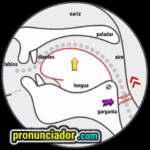
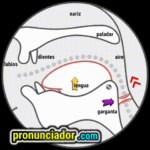
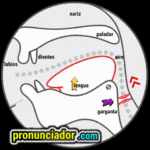
- Lips Slightly Rounded (Kissing Prep!): This is another important visual and physical cue! Your lips round slightly and often push out a little bit (pucker or protrude). Like you’re about to say “oooo” or give a tiny whistle.
Super-Duper Simple Summary: To make the /ʃ/ SH sound:
- Make your lips into a small, slightly puckered “O”.
- Raise the middle/front part of your tongue up towards the roof of your mouth, like you’re making a little ramp, but don’t let it touch.
- BLOW air steadily over your tongue.
- Keep your voice box OFF (no buzzing in your throat!).
It should sound like a smooth, continuous “SHHHHHHHHH”.

The CRUCIAL Sound-Alike Battles! /ʃ/ vs. /s/ vs. /tʃ/
Nailing these differences is HUGE for clear American English!
- /ʃ/ (Ship) vs. /s/ (Sip) – Tongue Position & Lips!
- /ʃ/ (SHip): Lips ROUNDED. Tongue blade/front ARCHES UP towards palate. Air is broader, “whooshier.”
- /s/ (Sip): Lips SPREAD (like a flat smile). Tongue TIP is very close to alveolar ridge (bumpy part), making a narrow groove. Air is a sharp “hiss.”
- Mistake: Using /s/ for /ʃ/ makes “shoe” /ʃu/ sound like “Sue” /su/.
- Fix: ROUND LIPS for /ʃ/! And feel the tongue arch UP, not just the tip near the ridge.
- /ʃ/ (Ship) vs. /tʃ/ (Chip) – Friction vs. Stop+Friction!
- /ʃ/ (SHip): PURE FRICTION. Air flows continuously: “Shhhhhh.”
- /tʃ/ (CHip): It’s a COMBO! Starts with a quick STOP (like /t/ – tongue tip on alveolar ridge briefly blocks air), THEN releases into the /ʃ/ sound. It’s a short, sharp “T-SH!” sound. (Technically, an “affricate”).
- Mistake: Using /tʃ/ for /ʃ/ (makes it sound too hard/choppy) or /ʃ/ for /tʃ/ (makes it sound too soft/long). “Wish” /wɪʃ/ might sound like “Which” /wɪtʃ/. “Sheep” /ʃip/ might sound like “Cheap” /tʃip/.
- Fix: For /ʃ/, NO initial tongue-tip stop. For /tʃ/, MUST have that quick T-stop first. Feel the “cut-off” for /tʃ/ vs. the smooth flow for /ʃ/.
- /ʃ/ (Confession – voiceless) vs. /ʒ/ (Confusion – voiced) – The Buzz!
- These two sounds are “twins” – made with the EXACT SAME mouth and tongue position (lips rounded, tongue arched)!
- The ONLY difference: /ʃ/ is VOICELESS (no buzz). /ʒ/ (like S in ‘vision’ or ‘pleasure’) is VOICED (buzz ON!).
- Mistake: Not voicing /ʒ/ correctly (making it sound like /ʃ/). Or accidentally voicing /ʃ/.
- Fix: THROAT BUZZ TEST! Hand on throat. “Confession” /kənˈfɛʃən/ (ends /ʃən/) = NO buzz on SH. “Confusion” /kənˈfjuʒən/ (ends /ʒən/) = YES buzz on ZH!
Your Mouth Guide to the “SHHH” /ʃ/ Sound! (Easy Peasy!)
Let’s build that perfect, airy SH!
Step 1: Mouth – Just a Little Bit Open
No need to open wide. Just a slight, natural opening.
Step 2: Lips – Get Ready to Say “Oooo”! (Rounded & Pushed Out)
- This is SUPER important for the American SH! Round your lips as if you’re about to say “oooo” or “shhhh”.
- And push them out just a little bit (protrude/pucker). Think of a very gentle fish face! 😉
Step 3: Tongue – The “Ramp” to the Roof! (Arched, Not Touching!)
- This is where the /ʃ/ magic really happens.
- Let your tongue tip relax, either pointing slightly down or just neutrally behind your bottom teeth. (It’s NOT the main player like in /s/).
- The BLADE (the part just behind the tip) and the FRONT/MIDDLE part of your tongue ARCHES UPWARDS, making a big curve or ramp towards the roof of your mouth (hard palate and the area just behind the alveolar ridge).
- CRUCIAL: Your tongue gets CLOSE to the roof, but DOES NOT TOUCH IT! There must be a small, narrow gap all along that arch for the air to squeeze through.
Step 4: Air Stream – The Whoosh!
- Now, gently blow a continuous stream of air from your lungs, over the top of your arched tongue, and out through that narrow gap and your rounded lips.
- You should hear that classic, smooth “shhhhhhhhh” friction sound.
Step 5: Voice Box – Quiet on Set! (OFF!)
- Remember, this is a VOICELESS sound. Your vocal cords in your throat should be completely still, not vibrating.
- It’s just the sound of air moving and rubbing.
Put it Together: Puckered Lips + Tongue Arched (No Touch!) + Air Whoosh + Voice OFF = Perfect American /ʃ/!
Try it: Make “SHHHHHHHHHH” and hold it. Can you feel the air? Lips rounded? Tongue not quite touching the top? Great!
The SH Sound’s Sneaky Disguises! Spelling /ʃ/ (It’s a Mess!)
Oh boy! If you thought /ʃ/ was only spelled “SH”, get ready for a surprise party! The way this sound is written is one of the most confusing things in English spelling!
The SHOCKER: ‘T’ is the #1 Speller! (~51%)
You read that right! Most of the time, the /ʃ/ sound is spelled with a ‘T’ – typically in suffixes like -TION, -TIAL, -TIENT! This blows people’s minds!
- –TION: nation /ˈneɪʃən/, station /ˈsteɪʃən/, action /ˈækʃən/, option /ˈɑpʃən/, information /ˌɪnfərˈmeɪʃən/, situation /ˌsɪtʃuˈeɪʃən/* (often /tʃuˈeɪʃən/ here!). -> Better: definition /ˌdɛfəˈnɪʃən/.
- –TIAL: partial /ˈpɑrʃəl/, essential /əˈsɛnʃəl/, confidential /ˌkɑnfɪˈdɛnʃəl/, initial /ɪˈnɪʃəl/.
- –TIENT: patient /ˈpeɪʃənt/.
- –TIOUS: ambitious /æmˈbɪʃəs/, cautious /ˈkɔʃəs/.
- –TURE (often before ‘R’ in stressed -ture): picture /ˈpɪktʃər/* (Usually /tʃər/! not /ʃər/) -> The source for ‘SURE’ /ʃər/ mentioned -TURE, this video does not seem to list /tʃər/ for T. Focus on TI combinations here for clarity from THIS source’s pie chart.
Key: Look for TI followed by another vowel in an unstressed suffix! (na-TIon).
The “Obvious” One: ‘SH’ (~32%)
Thank goodness, ‘SH’ is the second most common! Phew! This one makes sense!
- she /ʃi/, show /ʃoʊ/, ship /ʃɪp/, shop /ʃɑp/, wish /wɪʃ/, fish /fɪʃ/, push /pʊʃ/, English /ˈɪŋɡlɪʃ/, finish /ˈfɪnɪʃ/.
The “Special C”: ‘C’ Before IA, IE, IO, IU (~7%)
Yes, ‘C’ can sound like SH! Usually when it’s followed by two vowels, the first often being ‘I’ or ‘E’.
- –CIAL: special /ˈspɛʃəl/, official /əˈfɪʃəl/, social /ˈsoʊʃəl/, commercial /kəˈmɜrʃəl/, financial /faɪˈnænʃəl/.
- –CIAN: musician /mjuˈzɪʃən/, politician /ˌpɑləˈtɪʃən/.
- –CIENT: ancient /ˈeɪnʃənt/, sufficient /səˈfɪʃənt/.
- –CIOUS: delicious /dɪˈlɪʃəs/, suspicious /səˈspɪʃəs/, gracious /ˈɡreɪʃəs/.
- –CEAN: ocean /ˈoʊʃən/.
The Tricky ‘S’: Before URE or Sometimes U (~7%)
‘S’ can sound like /ʃ/! We just saw its twin /ʒ/ (visual).
- Sure /ʃʊr/ (and insure, assure…).
- Sugar /ˈʃʊɡər/.
- Pressure /ˈprɛʃər/ (-SSURE = /ʃər/).
- Tissue /ˈtɪʃu/ (or /ˈtɪsju/) (-SSUE often /ʃu/).
- Mission /ˈmɪʃən/ (-SSION often /ʃən/).
- Passion /ˈpæʃən/.
- Tension /ˈtɛnʃən/.
- (Careful: S is usually /s/ or /z/! These are specific patterns/words).
The French Chef ‘CH’: Rare, Mostly French Loanwords
CH is normally /tʃ/ (church). But in some words (often from French), it’s /ʃ/!
- Machine /məˈʃin/
- Chef /ʃɛf/
- Mustache /ˈmʌstæʃ/
- Brochure /broʊˈʃʊr/
- Chic /ʃik/
- Niche /nɪʃ/ or /nitʃ/
- Champagne /ʃæmˈpeɪn/
- Chicago /ʃɪˈkɑɡoʊ/
Spelling Takeaway for /ʃ/:
- TI (in suffixes like -tion) is #1!
- SH is #2 and easy to spot!
- CI/CE (+ Vowel like -cial, -cean) is common.
- S/SS (in ‘sure’, -ssure, -ssion) needs attention.
- CH (French words) is a special case.
When in doubt? Listen, listen, listen, or check the IPA /ʃ/!

SH Sound Stumbles: Common Mistakes & Quick Fixes!
Let’s nail down the common ways non-native speakers get the /ʃ/ wrong!
- Mistake #1: Confusing /ʃ/ with /tʃ/ (Chip vs. Ship)!
- What’s Happening: Starting the /ʃ/ with a hard ‘T’ stop, making it a /tʃ/.
- The Fix: NO TONGUE TIP STOP! For /ʃ/, the air must flow smoothly and continuously from the start. /tʃ/ blocks air briefly with the tip then releases. /ʃ/ just squeezes air over the arched tongue blade. Think “SHHHH” (continuous) vs “CH!” (sharp stop + release).
- Mistake #2: Confusing /ʃ/ with /s/ (Sue vs. Shoe)!
- What’s Happening: Not rounding lips AND/OR not arching the tongue blade up enough. Tongue tip is too close to alveolar ridge, making a hissy /s/.
- The Fix: ROUND LIPS + TONGUE RAMP! Push lips slightly forward into a circle. Make the blade/front of your tongue arch up to make a ramp near the palate, pulling it further back than for /s/. /s/ has spread lips and tip-alveolar action.
- Mistake #3: Voicing it! (Accidentally saying /ʒ/ ‘Vision’ for /ʃ/ ‘Mission’)
- What’s Happening: Voice box is ON, vibrating, when it should be OFF.
- The Fix: VOICE OFF! Check your throat for buzzing. /ʃ/ is airy and quiet like wind. /ʒ/ has a motor. Practice “mission” /ˈmɪʃən/ (no buzz for SH) vs. “vision” /ˈvɪʒən/ (buzz for ZH).
- Mistake #4: Not Enough Lip Rounding or Tongue Arch.
- What’s Happening: Lips are flat, or tongue isn’t making that high ramp. Sound is weak or too much like /s/.
- The Fix: Exaggerate at first! Really pucker those lips slightly and feel the front/middle of your tongue arching way up, almost tickling the roof of your mouth, without touching.
SH Sound Bootcamp! Exercises to Perfect Your /ʃ/
Time to get that “SHHH” sound super smooth!
Exercise 1: The “SHHH” Hold
- Round lips slightly, push out. Arch tongue blade/front UP (don’t touch roof).
- Blow air continuously, NO voice. “SHHHHHHHHHHHHHHHHH…”
- Hold for 5 seconds. Feel the smooth air? Good!
Exercise 2: SH /ʃ/ vs S /s/ (Lip Shape & Tongue!)
Lip rounding is key here!
- She /ʃi/ (round lips, tongue arch) — Sea /si/ (spread lips, tongue tip)
- Shell /ʃɛl/ — Sell /sɛl/
- Mesh /mɛʃ/ — Mess /mɛs/
- Wash /wɑʃ/ — Wass (not a word) -> better: Bush /bʊʃ/ vs Bus /bʌs/
- Fish /fɪʃ/ — Fizz /fɪz/ (hiss with voice for /z/ here!)
Exercise 3: SH /ʃ/ vs CH /tʃ/ (Continuous vs Stop!)
Feel the initial block for /tʃ/ vs. the smooth start for /ʃ/.
- Ship /ʃɪp/ — Chip /tʃɪp/
- Wish /wɪʃ/ — Which /wɪtʃ/
- Shop /ʃɑp/ — Chop /tʃɑp/
- Cash /kæʃ/ — Catch /kætʃ/
- Mash /mæʃ/ — Match /mætʃ/
Exercise 4: Voicing ON/OFF: SH /ʃ/ vs ZH /ʒ/
Same mouth, just add/remove the throat buzz!
- Confusion /kənˈfjuʒən/ (BUZZ) — Mission /ˈmɪʃən/ (NO BUZZ)
- Pleasure /ˈplɛʒər/ (BUZZ) — Pressure /ˈprɛʃər/ (NO BUZZ)
- Asia* /ˈeɪʒə/ (BUZZ – common pronunciation) — Ash-ya /ˈæʃə/ (if a name?)
Exercise 5: Spelling Surprises for /ʃ/!
Practice words with those tricky spellings for /ʃ/:
- TI: nation, station, action, option, partial, essential, patient, ambitious.
- CI/CE: special, official, musician, ancient, delicious, ocean.
- S/SS: sure, sugar, pressure, tissue, mission, passion.
- CH: machine, chef, mustache, brochure, Chicago, champagne.
Exercise 6: Word List Workout
| PHONETICAL PRONUNCIATION |
| PHONETICAL PRONUNCIATION |
Exercise 7: Sentence Shuffle + Recording!
Record yourself! Is your /ʃ/ smooth? Lips rounded? Different from S/CH?
- “She [ʃ] should [ʃ] show [ʃ] sure [ʃ] shortly [ʃ].”
- “The nation’s [ʃ] information [ʃ] is essential [ʃ].”
- “This special [ʃ] ocean [ʃ] fish [ʃ] is delicious [ʃ].”
- “The Chicago [ʃ] chef [ʃ] showed us the machine [ʃ].”
- “My mission [ʃ] is to finish [ʃ] this official [ʃ] situation [ʃ]!”
FAQs: Your American SH /ʃ/ Sound Questions Answered!
Q1: What’s the BIGGEST mistake people make with the SH /ʃ/ sound?
Confusing it with /s/ (like “see”) or /tʃ/ (like “cheese”).
- For /s/ → /ʃ/: Round your lips and arch your tongue blade up and back a bit more.
- For /tʃ/ → /ʃ/: Make sure there’s NO initial ‘T’ stop. /ʃ/ is a continuous “whoosh”.
Q2: Why do words spelled with T, S, or C sometimes sound like SH /ʃ/?
Welcome to English spelling! 🤪
- TI + vowel (nation, partial) = Usually /ʃ/.
- CI/CE + vowel (special, ocean) = Usually /ʃ/.
- S/SS + U/ION (sugar, sure, pressure, mission) = Often /ʃ/.
- CH (chef, machine – from French) = Often /ʃ/.
It’s about patterns and word origins, not a strict rule for the single letters.
Q3: Is the /ʃ/ sound (show) the same as /ʒ/ (vision)?
Mouth position = YES (lips rounded, tongue arched). Voicing = NO!
- /ʃ/ (show) = Voiceless (no throat buzz, just air).
- /ʒ/ (vision) = Voiced (throat BUZZES!).
They are a voiceless/voiced pair, like S/Z or F/V.
Q4: Do I need to push my lips out a LOT for /ʃ/?
Just a slight rounding and pushing forward is enough. Think of the “shhh” quiet gesture. You don’t need a huge fish face! But they should definitely be more rounded and protruded than for an /s/ sound.
Q5: The vowel length rule was mentioned with “vision” vs “mission”. Does it apply here?
Yes! The vowel length rule states that vowels before voiceless consonants (like /ʃ/) tend to be shorter than vowels before voiced consonants (like /ʒ/). So the /ɪ/ in “mission” (before voiceless /ʃ/) will be a bit shorter than the /ɪ/ in “vision” (before voiced /ʒ/). It’s a subtle but natural feature.
Final Takeaways: Your Smooth American SH /ʃ/ is Here!
You’ve done it! You’ve unmasked the SH /ʃ/ sound and its many disguises. It’s all about that puckered-lip, tongue-arched, airy whoosh with no voice!
Key things to carry away:
- /ʃ/ = Lips ROUNDED + Tongue ARCHED (No Touch!) + Air WHOOSH + Voice OFF!
- Vs /s/ (sip): ROUND lips for SH, SPREAD for S. Tongue ARCH for SH, TIP for S.
- Vs /tʃ/ (chip): SH is CONTINUOUS air. CH has a quick T-STOP first.
- Vs /ʒ/ (vision): SH is NO buzz. ZH has BUZZ. (Same mouth!)
- SPELLING CRAZY: TI, SH, CI, S, CH… can ALL be /ʃ/. Learn the patterns!
- COMMON ERRORS: Wrong lips/tongue, adding ‘T’, wrong voicing.
Focus on that lip rounding and tongue arching without touching. Practice the contrasts. Listen to how many ways Americans make this “SHHH” sound, even with letters like ‘T’ or ‘C’! Record yourself saying “station”, “special”, “sugar”, “chef”. You’ll be “SHining” in no time! 😉nal pace, ensuring that the /ʃ/ sound remains clear.
👇🔥👇🔥👇🔥👇🔥👇🔥👇🔥
👉 RETURNS in the YEAR 2031 ! WHO? CLICK HERE ! 🔥



👇🔥👇🔥👇🔥👇🔥👇🔥👇🔥
👉 RETURNS in the YEAR 2031 ! WHO? CLICK HERE ! 🔥
👇🔥👇🔥👇🔥👇🔥👇🔥👇🔥
👉 RETURNS in the YEAR 2031 ! WHO? CLICK HERE ! 🔥
👉 RETURNS in the YEAR 2031 ! WHO? CLICK HERE ! 🔥
👉 RETURNS in the YEAR 2031 ! WHO? CLICK HERE ! 🔥