
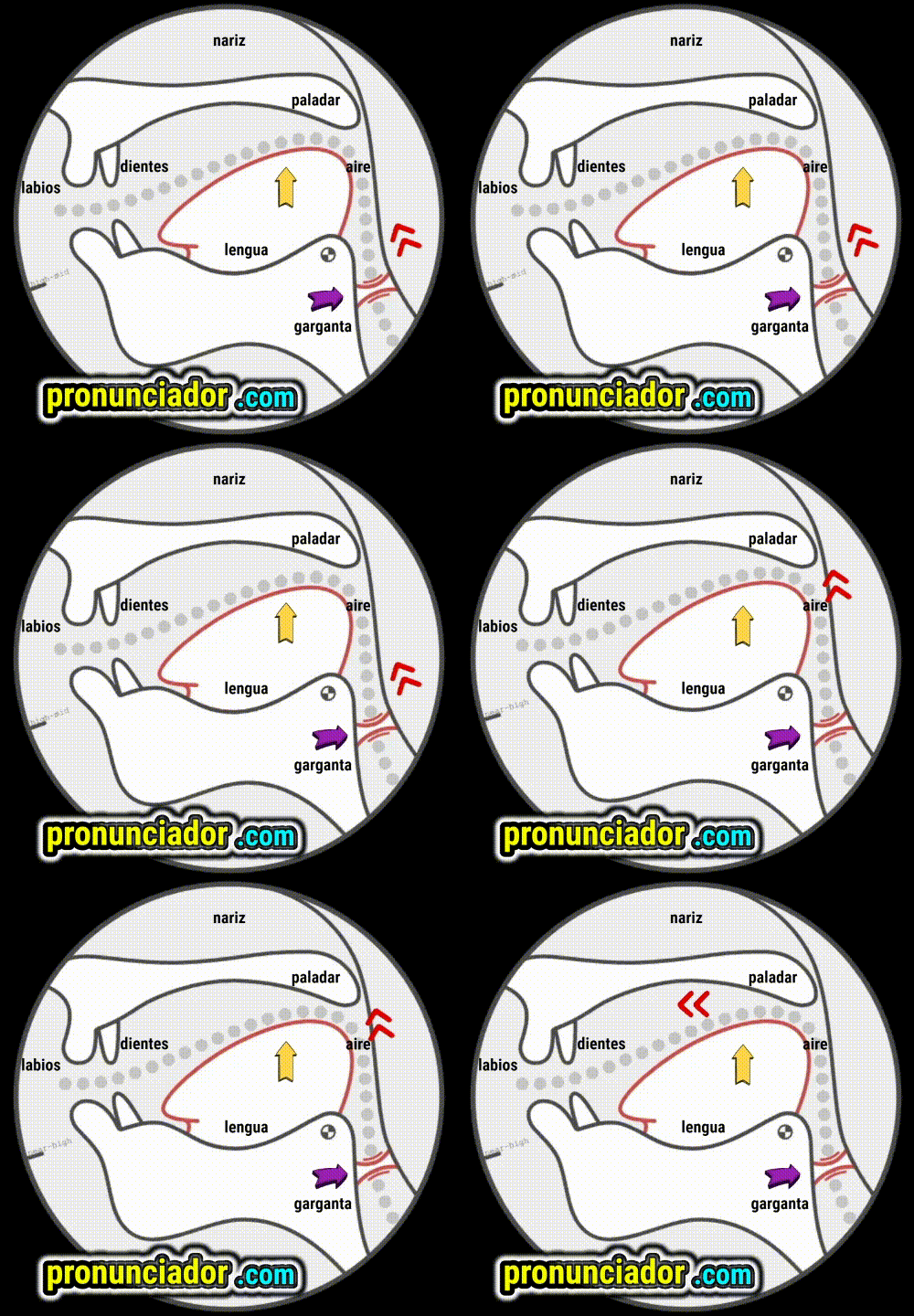
Confuse “bed” & “bad”? Master the American Short E /ɛ/ sound with this easy guide. Learn the relaxed jaw position, fix common errors & practice with examples.
Hey there, future pronunciation whizzes! Today, we’re diving into a vowel sound that’s absolutely EVERYWHERE in American English but is a classic tripwire for non-native speakers: the Short E sound, like in “bed“, “get“, or even “head“! Its special phonetic symbol is /ɛ/ (it kind of looks like a curly number 3, or a Greek epsilon!).
“Short E? Sounds easy enough!” you might think. And it should be, because it’s one of the top 5 most used vowels! But here’s the secret: this exact /ɛ/ sound isn’t common in many other languages. So, what happens? Our brains try to substitute it with something familiar! Most often, learners will accidentally use the Short A /æ/ sound (like in “bad” or “cat”) instead. Result? You want to talk about your comfortable “bed” /bɛd/, but it comes out sounding like something is very “bad” /bæd/! Or you ask someone to “set” /sɛt/ the table, and they hear “sat” /sæt/ (past tense of sit)! BIG confusion!
Sometimes, you might also make it sound too much like the Short I /ɪ/ (“kit”), making “bet” /bɛt/ sound like “bit” /bɪt/. Or, you might over-tense it, making it sound more like the Long E /i/ (“meet”) instead of the relaxed Short E /ɛ/ in “met”. It’s frustrating when you know the words, but these tiny vowel differences are holding back your clarity and marking your accent. And then there’s the spelling! How can ‘E’ (bed), ‘EA’ (head), ‘A’ (many), and ‘IE’ (friend) ALL sometimes make this same Short E /ɛ/ sound? It feels like a puzzle!
But guess what? We’re about to make the Short E /ɛ/ your new best friend! This ULTIMATE guide will make it super-duper easy (8-year-old easy!) to finally nail this crucial American vowel:
- Meet the “Relaxed EH”: What exactly IS the /ɛ/ sound? (Hint: Mouth part-way open, TONGUE FORWARD, all RELAXED!).
- The #1 BATTLE: /ɛ/ (bed) vs. /æ/ (bad)! We’ll conquer this MONSTER confusion for good! (The JAW is your secret weapon!).
- More Sound Showdowns: Clear differences between /ɛ/ (let) and /ɪ/ (lit), AND /eɪ/ (late)!
- Mouth Magic Explained Simply: Easy, step-by-step instructions: how to position your mouth, lips, and tongue for that perfect, relaxed /ɛ/.
- Crazy Spelling DECODED! E, EA, A, IE, AI… We’ll show you when they usually make the /ɛ/ sound!
- Zap Those Common Mistakes! No more “bad” for “bed”! We’ll fix the main errors INSTANTLY!
- Practice Power-Up! Fun, easy exercises and loads of common words (‘get’, ‘friend’, ‘said’, ‘head’, ‘many’, ‘when’, ‘yes’) to make your Short E /ɛ/ sound naturally American!
Get ready for your “head,” “friend,” “any,” “better,” and “everything” to sound sharp, clear, and just right! Let’s get to it! 😉

What’s This /ɛ/ Short E Sound Anyway? (The “Eh” in Bed!)
Let’s properly introduce our star for today: the /ɛ/ vowel sound. This sound is one of the fundamental “single” vowels in American English (meaning it’s not a diphthong, or a gliding sound – yay!). And it’s super common!
You hear it constantly in words like:
- bed /bɛd/
- get /ɡɛt/
- well /wɛl/
- let /lɛt/
- yes /jɛs/
- when /wɛn/
- friend /frɛnd/
- head /hɛd/
- said /sɛd/
- many /ˈmɛni/
Its Secret Code (Super Easy Explanation!)
The sound scientists like to call /ɛ/ a “low-mid, relaxed, front vowel.” Let’s translate that into simple English:
- Front Vowel (Tongue to the FRONT!): For this sound, your tongue is positioned towards the FRONT of your mouth. Imagine the front part of your tongue wants to get a good view out of your front teeth!
- Low-Mid Vowel (Jaw PART-WAY Open, Tongue Mid-Low!): Think about how high your tongue is. For “eeee” /i/ (see), it’s super high. For “aaah” /ɑ/ (hot), it’s super low. For /ɛ/, your tongue is comfortably in the middle, but leaning a bit towards the LOW side. This means your JAW (your mouth opening) is also PARTIALLY OPEN – not wide open like for /æ/ (cat), and not almost closed like for /i/ (see). It’s a nice middle ground.
- RELAXED Vowel (Chill Out!): ★★★ THIS IS SO IMPORTANT! ★★★ Like its cousins /ɪ/ (it) and /ʊ/ (book), the /ɛ/ vowel is RELAXED. This means your tongue and lips should be soft and floppy, with no unnecessary muscle tension. No straining!
- Lips Slightly Spread (but still RELAXED!): For /ɛ/, your lips are slightly spread to the sides, like you’re starting a very gentle, relaxed smile. But don’t make it a wide, tense grin! The key is still RELAXED lips. They are unrounded (not making an “O” shape).
Kid-Friendly Summary for /ɛ/ (the “eh” in “bed”):
- Open your mouth a little bit (not too wide!).
- Let your lips make a tiny, lazy smile (just a little bit to the sides, super relaxed).
- Let your tongue relax and push it gently to the FRONT of your mouth, keeping it kind of low down but not flat on the floor. The tip can rest behind your bottom teeth.
- Now say a short, clear “eh!” like in “bed” or “get”!
The BIGGEST MISTAKE: /ɛ/ (Bed) vs. /æ/ (Bad) – Jaw Drop is the Key!
This is the ultimate confusion for SO many learners! These sounds can be close, but they change word meanings DRASTICALLY! If you say “I want to go to bad /bæd/,” people will be very confused!
| Feature | SHORT E /ɛ/ (Bed, Men) | SHORT A /æ/ (Bad, Man) |
| JAW OPENING? | PARTIALLY OPEN (Midway) | WIDE OPEN! (Jaw drops a LOT!) |
| Tongue Height? | Mid-Low (Below midline) | VERY LOW (Flat on mouth floor) |
| Tongue Push? | Forward | Forward (maybe more pushed/flat?) |
| Lips? | Slightly Spread, RELAXED | Slightly Spread (maybe a bit tenser because of wide jaw) |
| Feels Like? | Relaxed, mid-open | Mouth much more stretched open |
THE #1 FIX: Pay attention to your JAW!
- For /ɛ/ (bed): Mouth opens only moderately. You can maybe fit one finger vertically between your teeth.
- For /æ/ (bad): Your jaw needs to DROP much more. You can usually fit two fingers vertically.
Try it! Bed (one finger) vs. Bad (two fingers). That jaw drop for /æ/ is what creates the space for the tongue to be flatter and lower.
Other Sound-Alike Traps for /ɛ/:
- /ɛ/ (Let) vs. /ɪ/ (Lit) – Jaw & Tongue Height!
- /ɛ/ (Let): Jaw more open, tongue lower (mid-low front).
- /ɪ/ (Lit): Jaw more closed, tongue higher (high-ish front). Both relaxed.
- Don’t make your “bet” sound like “bit”!
- /ɛ/ (Met) vs. Long A /eɪ/ (Mate) – Static Relaxed vs. Moving Tense!
- /ɛ/ (Met): Single, RELAXED sound. Jaw mid-open, static.
- /eɪ/ (Mate): DIPHTHONG (E→I glide). TENSE start. Jaw starts mid, then CLOSES slightly as tongue rises.
- “Met” /mɛt/ vs. “Mate” /meɪt/. Very different energies and movements!

Your Relaxed “EH” Mouth Guide: Making the Short E /ɛ/ (EASY!)
Let’s build this super common “eh” sound smoothly!
Step 1: Mouth – Just Chillin’ (Partially Open)
Relax your jaw and let your mouth open part-way. Not a tiny slit, not a huge yawn. Just a comfortable, medium opening.
Step 2: Lips – The “Lazy Mini-Smile”! (Slight Spread, Relaxed)
- Let the corners of your lips stretch very slightly to the sides. Think of a tiny, barely-there smile.
- Crucially: Keep those lips RELAXED! No tension, no tight pulling. Just a soft, slight spread.
Step 3: Tongue – Relaxed, Forward, and Mid-Low!
This is where the magic for /ɛ/ happens!
- RELAX your tongue! Imagine it’s a soft pillow.
- Gently push the front/middle part of your tongue FORWARD in your mouth, towards your front teeth.
- Position your tongue so it’s just BELOW the midline height in your mouth. It’s not high up, not way down low on the floor, but comfortably in that lower-middle zone.
- The tip of your tongue can lightly rest just behind your bottom front teeth. This often helps it stay forward and relaxed.
Step 4: The Sound – “Eh!” (Clear, Short, Relaxed)
- With your mouth, lips, and tongue in this relaxed, forward, mid-low setup, let out a voiced sound: “eh”.
- It should be short and clear. If it sounds too much like “aaah” (like /æ/), your jaw is too wide, and tongue too low. If it sounds too much like “ih” (like /ɪ/), your jaw is too closed and tongue too high.
- It’s that perfect “eh” you hear in “get,” “bed,” “friend.”
Feeling Check: Jaw part-way open and relaxed? Lips gently spread and relaxed? Tongue soft, forward, and in that mid-low front position? Sound is a clear, short “EH”? You’ve got it!
What Letters Make the /ɛ/ Sound? (E, EA, A, IE, AI – Oh My!)
This is where it gets interesting! While ‘E’ is the main speller, several other surprising letter combinations can also make the Short E /ɛ/ sound!
The Main Hero: Letter ‘E’! (~92%-93%)
Thank goodness, most of the time (a whopping 92-93%!), the /ɛ/ sound is spelled with a simple letter ‘E’! This usually happens in:
- Stressed, closed syllables (consonant after E):
- bed, red, get, let, yes, when, tell, them, then, help, left, next, went, end, best, test, men, pen, set.
- Some other common words: never, ever, else, egg, elephant.
Super Tip: Stressed ‘E’ + Consonant(s)? → Highly likely it’s Short E /ɛ/! (Unless it’s ‘er’ like in ‘her’ /ɜr/, or weird E_E like ‘these’ /i/).
The Tricky Team: ‘EA’! (~5%-6%)
BEWARE! ‘EA’ is famous for usually sounding like Long E /i/ (eat, sea, mean). BUT, there’s a crucial list of common words where ‘EA’ makes the SHORT E /ɛ/ sound! You HAVE to memorize these!
- Key /ɛ/ words with ‘EA’:
- head /hɛd/
- dead /dɛd/
- bread /brɛd/
- spread /sprɛd/
- thread /θrɛd/
- threat /θrɛt/
- sweat /swɛt/
- weather /ˈwɛðər/
- health /hɛlθ/
- wealth /wɛlθ/
- breath /brɛθ/ (noun! The verb ‘breathe’ is /brið/ with Long E!)
- breakfast /ˈbrɛkfəst/
- heavy /ˈhɛvi/
- ready /ˈrɛdi/
- jealous /ˈdʒɛləs/
- measure /ˈmɛʒər/ (ends in /ʒər/)
- pleasure /ˈplɛʒər/ (ends in /ʒər/)
- treasure /ˈtrɛʒər/ (ends in /ʒər/)
- weapon /ˈwɛpən/
- There are others, but these are the big ones!
The Surprise Visitor: ‘A’ (In just a couple of key words!) (~ <1%)
Very rarely, ‘A’ can make the /ɛ/ sound. Mainly:
- many /ˈmɛni/
- any /ˈɛni/ (and anything, anyone, anyway…)
- (The word “Thames” (river) also, but that’s a proper noun).
The Friendly ‘IE’ (Just one major word!) (~ <1%)
One super common word uses ‘IE’ for /ɛ/:
- friend /frɛnd/ (and friendly, friendship…).
- (Rarely ‘Lieutentant’ in British English can use /lɛf-/, but AmE is /lu-/ or /lə-/).
The Ultra-Rare Guests: ‘AI’, ‘AY’, ‘UE’, ‘EO’ (All “etc.” category)
These are mostly one-off, very specific words:
- AI: said /sɛd/! Again /əˈɡɛn/ or /əˈɡeɪn/.
- AY: says /sɛz/ (the S at the end becomes /z/ too!).
- UE: guess /ɡɛs/, guest /ɡɛst/.
- EO: jeopardy /ˈdʒɛpərdi/, leopard /ˈlɛpərd/.
Short E /ɛ/ Spelling Cheat Sheet:
| Spelling | Frequency (Web) | Primary Clue | KEY Examples /ɛ/ | WATCH OUT! That spelling also often means… |
| E | ~93% (WINNER!) | Stressed, closed syllable (E+Cons.) | bed, get, when, next, left | Long E /i/ (be), Magic E /eɪ/ (these) |
| EA | ~5% | MEMORIZE THE LIST! (head group) | head, dead, bread, ready | Long E /i/ (eat, sea)!! Long A /eɪ/ (great)!! |
| A | Tiny % (‘etc’) | MEMORIZE: Many, Any | many, any | /æ/(cat), /eɪ/(lake), /ɑ/(car)… |
| IE | Tiny % (‘etc’) | MEMORIZE: Friend | friend | /i/(piece), /aɪ/(die) |
| AI/AY | Tiny % (‘etc’) | MEMORIZE: Said, Says | said, says | /eɪ/(rain, day)!! |
| UE/EO | Tiny % (‘etc’) | MEMORIZE: Guess, Guest, Leopard | guess, leopard | UE=/u/(blue), /ju/(cue) |
Bottom Line for /ɛ/: The letter ‘E’ is your best friend here. For ALL OTHER spellings (EA, A, IE, etc.), you basically need to MEMORIZE a specific list of common words that use /ɛ/. There aren’t broad, easy rules for those exceptions.
Bye-Bye “Bad” for “Bed”! Fixing Short E /ɛ/ Mistakes!
Let’s squash those common ways learners get the Short E /ɛ/ sound wrong!
- MISTAKE #1: THE BIGGEST! Making it /æ/ (Short A – “cat”)! Jaw TOO OPEN!
- Problem: Your jaw drops too low, tongue flattens too much. “Bed” → “Bad.” “Men” → “Man.” This is the #1 source of confusion.
- Fix: LESS JAW DROP! For /ɛ/, your mouth is only partially open, tongue mid-low front. For /æ/, it’s WIDE open, tongue very low. Feel the difference. Try placing just one finger between your teeth for /ɛ/, then try two for /æ/.
- MISTAKE #2: Making it /ɪ/ (Short I – “kit”)! Jaw TOO CLOSED!
- Problem: Your jaw is too high/closed, tongue too high. “Bet” → “Bit.” “Pen” → “Pin.”
- Fix: MORE JAW DROP! /ɛ/ is lower than /ɪ/. Relax your jaw downwards a bit more for /ɛ/. Tongue mid-low, not high.
- MISTAKE #3: Making it like Long E /i/ (“meet”)! TOO TENSE, TOO HIGH, TOO SMILEY!
- Problem: Too much muscle tension, lips spread very wide, tongue very high. “Met” /mɛt/ → “Meet” /mit/.
- Fix: RELAX! LESS SMILE! TONGUE LOWER! /ɛ/ is relaxed. Lips only a slight lazy spread. Tongue mid-low front, not way up high.
- MISTAKE #4: Making it like Long A /eɪ/ (“mate”)! ADDING A GLIDE!
- Problem: You start okay with an “eh” sound, but then your jaw closes and tongue rises at the end, making it “EH-IH” /eɪ/. “Wet” /wɛt/ → “Wait” /weɪt/.
- Fix: NO MOVEMENT! /ɛ/ is a single, static vowel. Once your mouth is in the /ɛ/ position, KEEP IT THERE for the sound. Don’t let it slide or change.
- MISTAKE #5: Being Confused by ‘EA’ and ‘A’ Spellings.
- Problem: Always expecting ‘EA’ to be /i/ (“eat”) or ‘A’ to be /æ/ (“cat”) or /eɪ/ (“cake”).
- Fix: MEMORIZE THE /ɛ/ EXCEPTIONS! Learn that head, dead, bread use /ɛ/. And many, any use /ɛ/. Drilling these words is key.
Easy Trick for /ɛ/: It really is the vowel in “bed”. Say “bed” slowly. Feel that middle “eh” vowel? Mouth part-way open, tongue forward and relaxed. That’s your target!

Short E /ɛ/ Practice Arena! “Get” it Right!
Time to train that relaxed, forward “EH”!
Exercise 1: Just the Sound – Your Relaxed “EH” /ɛ/
- Mouth part-way open. Lips slight lazy spread. Tongue relaxed, forward, mid-low, tip behind bottom teeth.
- Make a short, clear “eh”: /ɛ/, /ɛ/, /ɛ/. Easy does it!
Exercise 2: JAW BATTLE! /ɛ/ (Bed) vs. /æ/ (Bad)
THIS IS THE ONE! Pay attention to your JAW OPENING!
- Bed /bɛd/ (Jaw MID) — Bad /bæd/ (Jaw WIDE OPEN)
- Men /mɛn/ — Man /mæn/
- Set /sɛt/ — Sat /sæt/
- Led /lɛd/ — Lad /læd/
- Pen /pɛn/ — Pan /pæn/
- Wreck /rɛk/ — Wrack /ræk/ (torment)
- Use a mirror or your fingers to check jaw height!
Exercise 3: HEIGHT BATTLE! /ɛ/ (Bet) vs. /ɪ/ (Bit)
Tongue and Jaw HIGHER for /ɪ/, LOWER for /ɛ/.
- Bet /bɛt/ (Jaw Mid) — Bit /bɪt/ (Jaw More Closed)
- Pen /pɛn/ — Pin /pɪn/
- Sell /sɛl/ — Sill /sɪl/ (alféizar)
- Check /tʃɛk/ — Chick /tʃɪk/ (pollito)
- Desk /dɛsk/ — Disc /dɪsk/
Exercise 4: STATIC vs. GLIDE! /ɛ/ (Met) vs. /eɪ/ (Mate)
/ɛ/ is ONE sound. /eɪ/ MOVES E→I.
- Met /mɛt/ (Static EH) — Mate /meɪt/ (Moving E→I)
- Let /lɛt/ — Late /leɪt/
- Wet /wɛt/ — Wait /weɪt/
- Red /rɛd/ — Raid /reɪd/ (incursión)
- Bell /bɛl/ — Bail /beɪl/ (fianza)
Exercise 5: Master the Weird Spellings of /ɛ/!
Practice saying these words, all with the SAME /ɛ/ sound!
- E: get, well, let, yes, when, tell, them, then, never, help, better, left, head*, else, next, went, dead*, end, best, everything, hello, remember, yourself, already. (Head & Dead are EA here, this word list in screenshot seems simplified for E first, will sort into EA list too).
- EA: head, dead, bread, spread, thread, threat, sweat, weather, health, ready, jealous, measure, pleasure.
- A: many, any.
- IE: friend.
- AI/AY: said, says.
- UE: guess, guest.
Exercise 6: Common Word Workout
| PHONETICAL PRONUNCIATION |
| PHONETICAL PRONUNCIATION |
Exercise 7: Short E /ɛ/ Sentences + Recording Time!
RECORD YOURSELF! Does your /ɛ/ sound right? Can you clearly hear it’s NOT /æ/ or /ɪ/?
- “My friend [ɛ] said [ɛ] he [i] went [ɛ] to bed [ɛ].” (Contrast with long E!)
- “Get [ɛ] ready [ɛ] for breakfast [ɛ] at ten [ɛ].”
- “There [ɛə] are many [ɛ] men [ɛ] heading [ɛ] west [ɛ].” (There is /ɛər/ R-Colored! But many/men/heading/west all use /ɛ/.)
- “Every [ɛ] expensive [ɪ][ɛ] jet [ɛ] needs [i] fuel [juəl].” (Very mixed!)
- “Help [ɛ] yourself [ɔɚ][ɛ] to whatever [ʌ][ɛ][ɚ] is left [ɛ].” (Lots of variety!)
FAQs: Your American Short E /ɛ/ (“bed”) Questions Cleared!
Q1: What’s the EASIEST way to tell Short E /ɛ/ (“bed”) from Short A /æ/ (“bad”)?
Your JAW!
- For Short E /ɛ/ (“bed”): Mouth opens PART-WAY. You can maybe fit one finger tip vertically between your teeth.
- For Short A /æ/ (“bad”): Mouth opens WIDE! Jaw drops much more. You can usually fit two fingers.
That jaw drop is the #1 physical difference!
Q2: Is Short E /ɛ/ (“let”) the same as the vowel in “late” /leɪt/?
NO! Very different!
- Short E /ɛ/ (“let”): Is a single, RELAXED sound. Mouth stays in one position.
- Long A /eɪ/ (“late”): Is a DIPHTHONG (moving sound). Starts like a tense “eh” and GLIDES up to an “ih”. Mouth CLOSES slightly.
Listen for the glide in “late”; “let” has no glide.
Q3: How can ‘EA’ (“head”) or ‘A’ (“many”) or ‘IE’ (“friend”) all sound like Short E /ɛ/?
Because English spelling is a wonderful, historical mess! 🤪
- EA: Has two common sounds: Long E /i/ (“eat”) and Short E /ɛ/ (“head”). You have to learn which words are which.
- A: “Many” and “any” are special exceptions. Almost all other ‘A’s make other sounds.
- IE: “Friend” is another special one-off.
Rule for weird spellings: MEMORIZE the common exception words!
Q4: Do I need to make my lips like a smile for Short E /ɛ/?
A very SLIGHT, RELAXED spread is typical. Like a super lazy, barely-there smile. Definitely NOT a big, tense grin (that’s for Long E /i/!). And NOT rounded. Relaxed and slightly spread is the way.
Q5: This /ɛ/ sounds a bit like my native language ‘e’. Can I just use that?
Probably not quite. Many languages’ ‘e’ sounds (like Spanish ‘e’ in “mesa”) are often a bit higher and tenser than the American Short E /ɛ/. The American /ɛ/ needs to be a little more open (jaw lower) and definitely more RELAXED. Try to soften and lower your native ‘e’ sound.
Wrapping Up: Your American Short E /ɛ/ is Ready for Bed (and Beyond)!
Awesome! You’ve explored the ins and outs of the American Short E /ɛ/ sound – that relaxed, forward “EH” in “bed,” “get,” and so many other words!
The BIG takeaways for your /ɛ/:
- /ɛ/ = RELAXED “EH”! Mouth PART-WAY open, Tongue FORWARD & mid-low, Lips SLIGHTLY SPREAD & RELAXED.
- #1 BATTLE vs /æ/ (cat): JAW IS KEY! /ɛ/ = less open. /æ/ = wide open!
- Vs /ɪ/ (kit): /ɛ/ is LOWER (more open).
- Vs /eɪ/ (kate): /ɛ/ is STATIC & RELAXED. /eɪ/ GLIDES & is TENSER.
- SPELLING: ‘E’ is the champ! MEMORIZE ‘EA’ words (head, dead), ‘many’/’any’, ‘friend’, ‘said’!
- MISTAKES: Usually making it /æ/ (jaw too open) or too tense/closed (like /ɪ/ or native ‘e’).
The secret is jaw position and overall relaxation. Practice those minimal pairs (bed/bad, bet/bit, met/mate). Listen closely to native speakers. Record yourself. Before you know it, your Short E /ɛ/ will be on point, making your American English sound significantly clearer and more natural! You can get this!
👇🔥👇🔥👇🔥👇🔥👇🔥👇🔥
👉 RETURNS in the YEAR 2031 ! WHO? CLICK HERE ! 🔥



👇🔥👇🔥👇🔥👇🔥👇🔥👇🔥
👉 RETURNS in the YEAR 2031 ! WHO? CLICK HERE ! 🔥
👇🔥👇🔥👇🔥👇🔥👇🔥👇🔥
👉 RETURNS in the YEAR 2031 ! WHO? CLICK HERE ! 🔥
👉 RETURNS in the YEAR 2031 ! WHO? CLICK HERE ! 🔥