
Does your “now” sound like “no”? Master the American ‘OW’ /aʊ/ vowel. This guide reveals the simple AH→UH mouth glide to fix common errors & sound like a native
Hey, American English pronunciation champs! Ever felt that little “ouch!” when you try to say words like “now**”, “how**”, “cloud“, or “town” and it just… doesn’t sound quite right? You know what you want to say, but that “ow” sound just doesn’t roll off the tongue like it does for native speakers. You’re not alone! This sound, with the secret code /aʊ/ (looks like ‘a’ plus a little upside-down ‘u’ or horseshoe), is another super important American DIPHTHONG!
Remember what a diphthong is? It’s not one boring, flat sound. It’s a VOWEL THAT MOVES! Your mouth takes a quick trip, starting in one vowel shape and gliding smoothly to another, all in one go! . For our awesome /aʊ/ sound, it’s like you start by yelling “AHHH!” (the /ɑ/ sound in “spa” or “hot”) and then, super quick, you slide your mouth into a short, relaxed “UH” (the /ʊ/ sound in “put” or “book”). It’s an AH → UH journey!
The BIGGEST issue learners have is missing that crucial slide! Maybe your “now” /naʊ/ sounds more like “nah” /nɑ/, or “house” /haʊs/ becomes “hahs”. You’re cutting off the second part of the journey! Or perhaps your starting “AH” isn’t open and back enough, or your ending “UH” doesn’t have those slightly rounded, relaxed lips. And don’t get us started on the spelling! ‘OU’ and ‘OW’… when is it which?! You might feel like you’re just guessing, and it makes your English sound a bit off, maybe a bit flat, and can even lead to some funny (or embarrassing!) misunderstandings (e.g., “shot” vs “shout”).
But fear not, sound adventurers! Today, we’re taming the /aʊ/ “OW” beast! This ULTIMATE, super-duper-easy guide will make you an /aʊ/ PRO:
- Meet the “AH-UH Super Slide” /aʊ/: We’ll break down exactly what this “ouch” sound is!
- Your Mouth’s Wild Ride (Kid-Style!): Crystal-clear, step-by-step instructions: JAW SUPER WIDE OPEN/LIPS NEUTRAL for “AH” → JAW CLOSING/LIPS GENTLY ROUNDING for “UH”!
- The “Big Start, Quick Finish” Rule: Why that “AH” part is king and “UH” is its loyal, quick sidekick.
- Sound Battles! /aʊ/ (Town) vs… We’ll make sure you’re not mixing it with /oʊ/ (Tone – “go”) or /ɑ/ (Tot – “hot”)!
- OU or OW? Spelling UNLOCKED! We’ll finally understand the main patterns for writing this sound. (Hint: One likes the middle, one likes the end!).
- Zap Those “OWW-ful” Errors! No more flat “AH” sounds where “OW” should be!
- “HOW NOW Brown Cow?” Practice! Awesome exercises with tons of key words (‘now’, ‘how’, ‘house’, ‘down’, ‘out’, ‘about’) to make your /aʊ/ absolutely awesome!
Get ready for your “how,” “now,” “brown,” and “cow” to sound dynamic, natural, and perfectly American! Let’s shout /ʃaʊt/ it out! 🎉
What Exactly IS This /aʊ/ “OW” Sound? (The “AH→UH” Glide!)
Alright, let’s put this common American English sound under the microscope. The /aʊ/ (think of the sound you make if you stub your toe: “Ow!“) is one of the three main diphthong vowel sounds. As we know, a diphthong is a vowel that changes or glides as you say it. Your mouth is literally on the move!
The /aʊ/ Journey: Starting with “AH” (/ɑ/) and Gliding to a Short “UH” (/ʊ/)
This is the secret formula to making a perfect American “OW” sound:
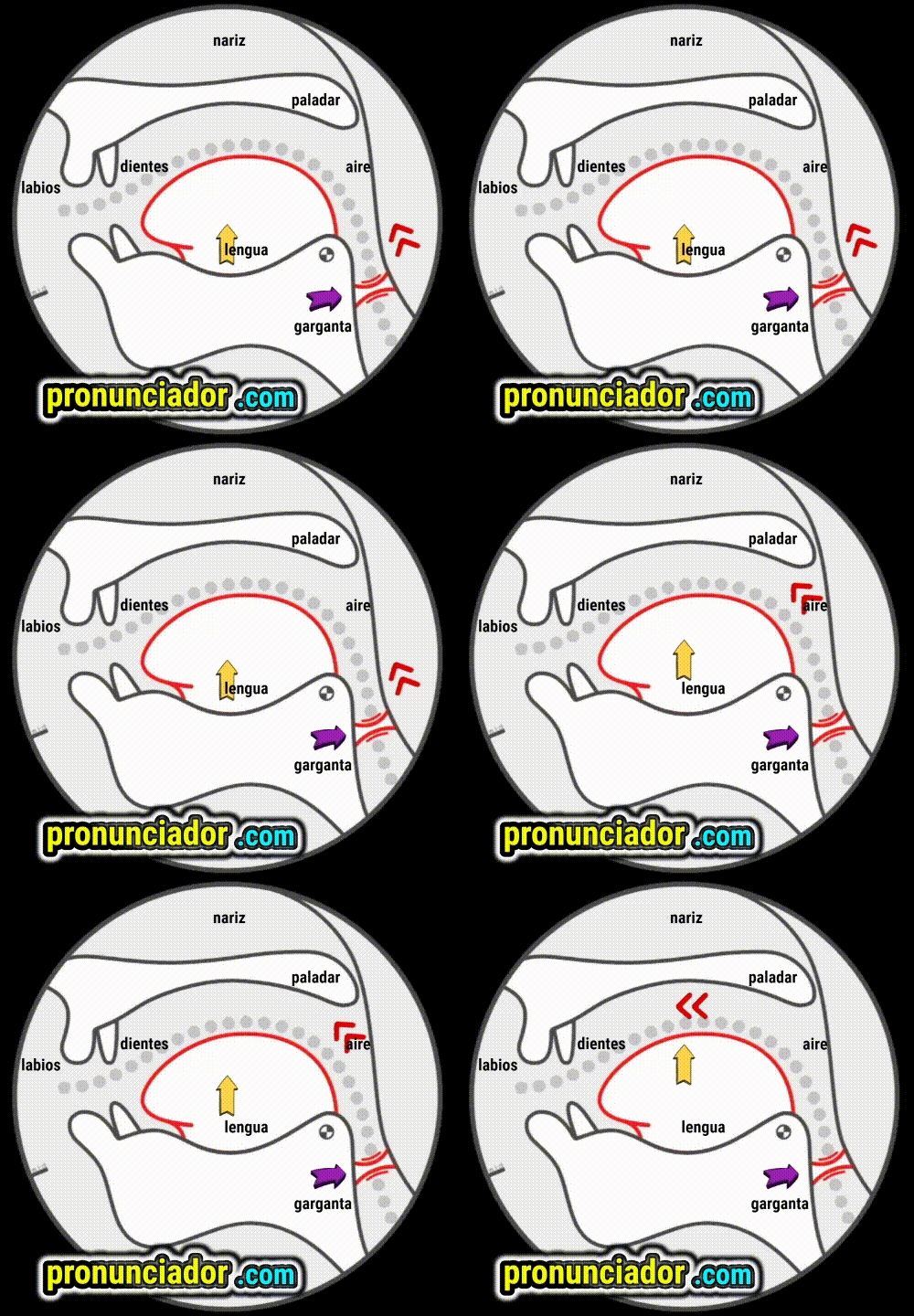
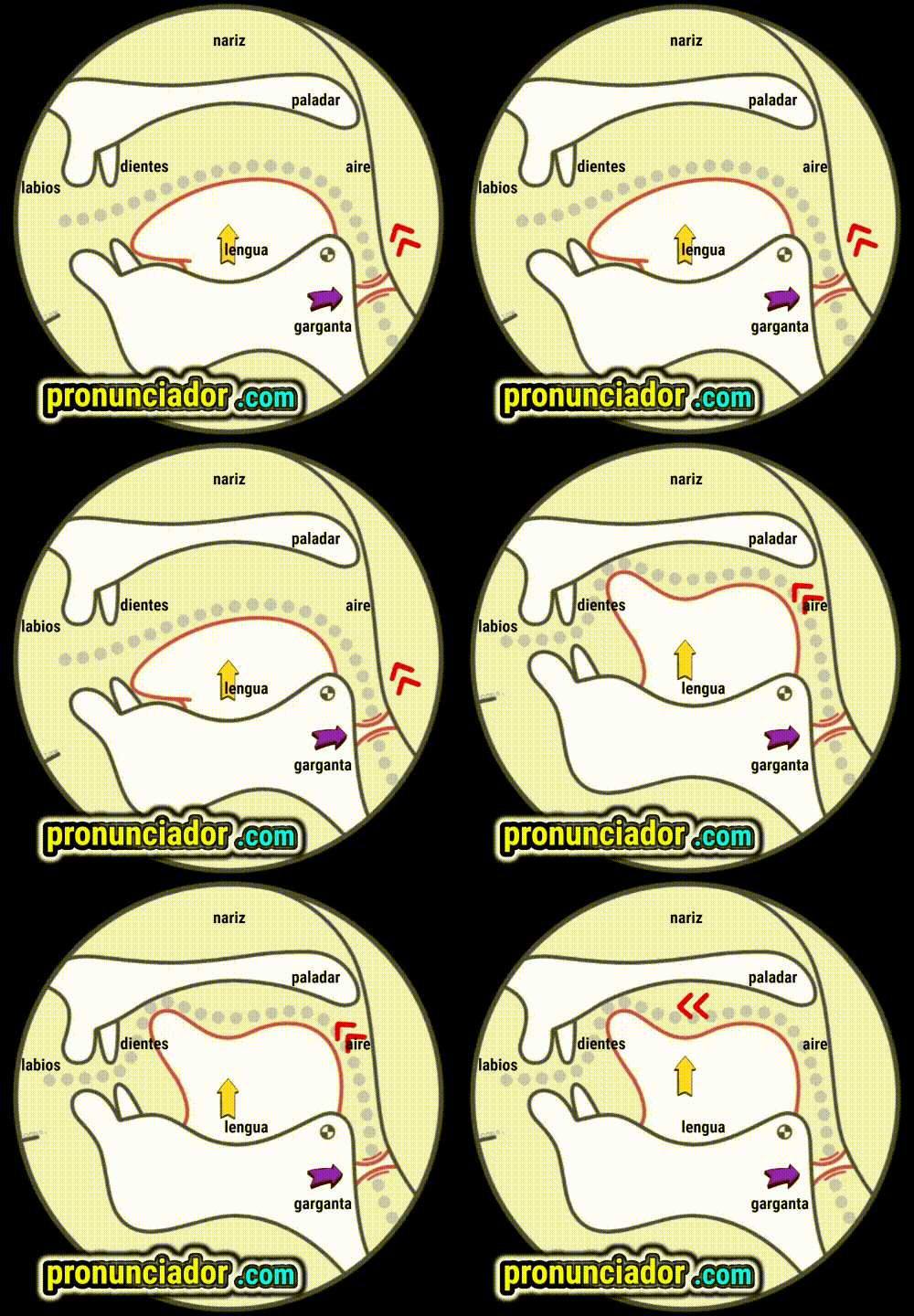
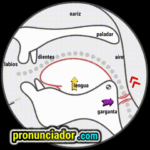
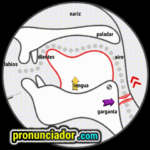
- The Starting Gate – Open Wide for “AH” /ɑ/: Your mouth starts by making the broad /ɑ/ vowel sound. This is the sound you make when the doctor says “say AHHH,” or the vowel in words like “father,” “spa,” or “hot.” For this, your mouth is WIDE OPEN, your tongue is low and flat, often pulled a bit back, and your lips are neutral (unrounded).
- The Destination – Relaxed, Rounded “UH” /ʊ/: From that open “AH” position, your mouth quickly and smoothly changes shape! Your jaw CLOSES up quite a bit, your tongue (especially the back) raises and pulls further back, and your lips GENTLY ROUND to make the Short U /ʊ/ sound – the sound in “put,” “book,” or “could.”
The Golden Formula for the “Cloud” Sound /aʊ/:
/aʊ/ = Start WIDE OPEN & LIPS NEUTRAL for “AH” (/ɑ/) → GLIDE SMOOTHLY as JAW CLOSES, LIPS ROUND, & TONGUE PULLS UP/BACK to → “UH” (/ʊ/)
It should be one continuous, flowing “Aaaaaaaahhhhhh-oooooh (soft u)” sound, blending seamlessly.
Length & Loudness Alert!
Just like with other English diphthongs, the first part of the /aʊ/ glide (the /ɑ/ “AH”) is typically a bit longer and a bit louder. The “AH” gets more emphasis, and the “UH” /ʊ/ is the quicker, softer landing point of that glide.
Critical Contrasts: Don’t Mix Your “OW” /aʊ/!
- /aʊ/ (Now, House) vs. Just /ɑ/ (Not, Hot) – The Missing “UH” Glide!
- /aʊ/ (Now): Dynamic GLIDE AH→UH. Mouth MOVES from open/unrounded to more closed/rounded.
- /ɑ/ (Not): Single, STATIC “AH” sound. Mouth STAYS WIDE OPEN, lips unrounded.
- #1 LEARNER MISTAKE: Saying only “Ah” for “Ow”. “Now” /naʊ/ sounds like “nah” (or the start of “not” /nɑt/). “House” /haʊs/ sounds like “hahs.”
- FIX: You MUST make that closing jaw movement, slight lip rounding, and tongue retraction for the final “UH” /ʊ/ part! It’s essential!
- /aʊ/ (Town) vs. /oʊ/ (Tone – Long O) – Very Different Mouth Movies!
- /aʊ/ (Town): Starts WIDE OPEN, lips NEUTRAL (/ɑ/), then jaw closes, lips GENTLY ROUND, tongue up/back (/ʊ/). Big jaw movement.
- /oʊ/ (Tone): Starts PARTIALLY OPEN, lips ALREADY ROUND & TENSE (/o/), then jaw closes more, lips TIGHTEN, tongue higher/backer (/ʊ/). Less jaw movement, lips always round.
- The Trap: Using the /oʊ/ sound (“go”) for /aʊ/ (“now”). Your “crowd” /kraʊd/ might sound like “croad” (not a word) or too much like “crode” (past tense of crow with /oʊ/ if one imagined such a word).
- FIX: For /aʊ/, START WIDE with UNROUNDED lips. For /oʊ/, START more closed with ROUNDED lips.
- /aʊ/ (About) vs. /ɔ/ (Abroad – “AW” sound): Openness & Lip Rounding
- /aʊ/ (About): Starts WIDE /ɑ/ (lips NEUTRAL) → glides to /ʊ/ (lips GENTLY ROUND).
- /ɔ/ (Abroad): SINGLE sound. Mouth OPEN (but often less than /ɑ/), lips ROUNDED throughout. Tongue low and back.
- The Trap: Starting /aʊ/ with lips already rounded like /ɔ/, or not opening the mouth wide enough.
- FIX: Ensure the “AH” start of /aʊ/ is truly open and LIPS ARE NEUTRAL before they round for the “UH” end.
The core idea for /aʊ/: It’s a big journey from a WIDE, NEUTRAL-LIPPED “AH” to a more CLOSED, GENTLY-ROUNDED “UH”. Feel that distinctive “OWW” movement!

Your Mouth’s “AH-to-UH” Glide: Making the /aʊ/ Sound (Super-Duper Easy Steps!)
Let’s get that mouth making the “OW” sound like in “ouch!” Perfect for stubbing your toe… or speaking great American English!
Step 1: The HUGE “AHHH” Starting Point! (Position for /ɑ/)
- Mouth SUPER WIDE OPEN! Like you’re about to eat the biggest burger ever, or the dentist says “WIDER!” Drop that jaw as low as you can!
- Lips CHILL & NEUTRAL! No rounding, no smiling. Just relaxed, natural lips.
- Tongue FLAT, LOW, & BACK! Let your tongue rest flat on the bottom of your mouth, with the main part of it pulled back a little. The tip can just hang out behind your bottom teeth.
You’re now set for the “AHHH” /ɑ/ sound – the launchpad!
Step 2: The Smooth Slide to Relaxed “UH” (oo like book)! (Position for /ʊ/)
Now, here comes the GLIDE! Keep the sound going as you move!
- KEEP YOUR VOICE ON! Don’t stop the sound.
- JAW GLIDES UP (Mouth Closes a Lot): Smoothly bring your jaw up, so your mouth goes from WIDE open to only SLIGHTLY open – much more closed.
- LIPS GENTLY ROUND (Like a Soft “Ooo”): As your jaw rises, your lips, which were neutral, now come together a bit and gently round. Not a tight kissy face, just a soft, small circle. This is key for the “UH” part!
- TONGUE (Back Part) PULLS UP & BACK! The back of your tongue raises up high towards the soft part of the roof of your mouth (the velum) and pulls a bit further back. It’s going for that Short U /ʊ/ position (like in “book”).
Step 3: Blend it Smoothly! “AAAH-oo(soft u)!” = /aʊ/ (“OW!”)
Diphthongs are all about that uninterrupted, smooth glide. It’s one continuous, changing sound!
- Start with that strong, wide-open, neutral-lipped “AAAHHH” (/ɑ/).
- Keep your voice flowing, and let your jaw rise, your lips gently round, and the back of your tongue pull up and back, transforming the sound into that soft “UH” (/ʊ/).
- The result is one flowing sound: “Aaaaaaaahhhhhh-oooooo(soft u)h” –> /aʊ/ “OW”!
- CRUCIAL REMINDER: The first “AH” (/ɑ/) part is usually louder and longer than the quick, softer “UH” (/ʊ/) finish. Don’t skip or rush the “AH” start!
- AND DON’T SKIP THE “UH” ENDING! Reducing that second /ʊ/ part is a super common mistake! It must be there for the full /aʊ/!
Kid-Friendly “Ouch!” Cue: “Imagine you just saw something AMAZING (mouth drops WIDE for ‘AHHH!’). Then, quickly, your mouth goes a bit ‘Ooooh’ like you’re saying ‘wow’ but softer (lips round a bit for ‘UH’). Do it all in one go: AHHH-Ooooh! OW! Like when you accidentally bump your elbow and say ‘OW!'”
Feeling Check: Big jaw drop and neutral lips for “AH,” then jaw closes smoothly as lips gently round and tongue pulls up/back for the “UH”? Is it one flowing sound? Fantastic! That’s your /aʊ/!
OU or OW? The Simple Spelling of the /aʊ/ “OW” Sound!
Fantastic news, everyone! Unlike some other English vowels that have a million spellings (yes, Long I /aɪ/, we’re looking at you!), the **/aʊ/ “OW” sound is spelled in just TWO main, very common ways! Woohoo!
Spelling Pattern #1: ‘OU’ (Often in the MIDDLE of a word) – (~70% – 69%)
This is usually the more frequent of the two, especially found in the middle of words. If you see ‘OU’, there’s a good chance it’s our /aʊ/ sound!
- cloud /klaʊd/
- house /haʊs/
- mouse /maʊs/
- mouth /maʊθ/
- sound /saʊnd/
- ground /ɡraʊnd/
- found /faʊnd/
- about /əˈbaʊt/
- around /əˈraʊnd/
- without /wɪˈðaʊt/
- loud /laʊd/
- proud /praʊd/
- shout /ʃaʊt/
- south /saʊθ/
- couch /kaʊtʃ/
- out /aʊt/ (can be at the start!)
- account /əˈkaʊnt/
- amount /əˈmaʊnt/
- doubt /daʊt/ (b is silent!)
- thousand /ˈθaʊzənd/
- (Be Aware: ‘OU’ can also spell other sounds like /u/ in “you“, /oʊ/ in “though”, /ʊ/ in “could”, or /ʌ/ in “tough”. So, while ‘OU’ for /aʊ/ is common, it’s not the only sound for ‘OU’! Always listen or check tricky words!)
Spelling Pattern #2: ‘OW’ (Often at the END of a word or before L/N) – (~30% – 31%)
This is the other major player, super common at the end of words, or often when followed by ‘L’ or ‘N’.
- now /naʊ/
- how /haʊ/
- cow /kaʊ/
- brown /braʊn/
- town /taʊn/
- down /daʊn/
- crowd /kraʊd/
- flower /ˈflaʊər/
- powder /ˈpaʊdər/
- towel /ˈtaʊəl/
- vowel /ˈvaʊəl/
- owl /aʊl/
- allow /əˈlaʊ/
- frown /fraʊn/
- gown /ɡaʊn/
- (Be Aware: ‘OW’ can also spell the Long O /oʊ/ sound, especially at the end of words like “snow” or “know“! So again, be a sound detective for ‘OW’ words you don’t know!)
Easy “OW” /aʊ/ Spelling Rule of Thumb:
- Generally, think ‘OU’ for the MIDDLE (house, sound).
- And ‘OW’ for the END (now, how) or before L/N (town, brown, flower).
This isn’t 100% strict (“loud” has OU, “allow” has OW in middle), but it’s a very helpful starting point!
And that’s pretty much it for common /aʊ/ spellings! Simple, right?
Oops! Common “OW” Sound /aʊ/ Mistakes & Super Fixes!
Where do learners typically stumble when trying to make this “AH→UH” glide? Let’s smooth those out!
- MISTAKE #1: THE BIG ONE! NO GLIDE! (The Flat “AH” or “AWW” Problem!)
- What Goes Wrong: You only make the first “AH” /ɑ/ part of the sound (mouth wide, lips neutral) and totally MISS the slide to the “UH” /ʊ/ (mouth more closed, lips gently round). So “now” sounds like “nah” or “naw“. “House” sounds like “hahs” or “haws”. It sounds very cut-off and unfinished.
- THE #1 FIX: MAKE THE “AH→UH” MOUTH MOVIE! You MUST feel your jaw coming UP, your lips gently ROUNDING, and your tongue pulling UP/BACK for that “UH” sound at the end. The /ʊ/ is quick and soft, but it absolutely must be there. Exaggerate “NAAAAAH-oooooh” then speed it up!
- MISTAKE #2: Wrong STARTING Vowel (Not a WIDE OPEN “AH” /ɑ/).
- The Problem: If you don’t start with your mouth really open and lips neutral for a true /ɑ/, the glide will sound off. Maybe you start too much like /æ/ (“cat”) or even /ɔ/ (“law” – with lips already rounded).
- The Fix: DROP THAT JAW for the “AH” START! Make sure your lips are relaxed and unrounded for this first part. Big, open “AAAHHH.”
- MISTAKE #3: Wrong ENDING Vowel (Not a Relaxed, Rounded “UH” /ʊ/).
- The Problem: Maybe you don’t round your lips at all at the end, so it’s like AH→ə (Schwa). Or maybe you make the ending too tense, like a full “OOO” /u/ (blue).
- The Fix: Aim for that RELAXED Short U /ʊ/ (“book”, “put”) as your landing spot. Gentle lip rounding, tongue relaxed but high/back. The “UH” should be soft.
- MISTAKE #4: Making it TWO Jumpy Sounds (AH… UH) Instead of ONE Smooth Glide.
- The Problem: There’s a distinct pause or jolt between the “AH” and the “UH.” It sounds clunky.
- The Fix: ONE CONTINUOUS SLIDE! It’s one flowing note where your mouth just changes shape smoothly. Think of a yodel, but way cooler: “AAAHoooooh.”
- MISTAKE #5: Not Making the First Sound (/ɑ/) LOUDER and LONGER.
- The Problem: You give equal stress or time to both parts, or you rush the “AH.”
- The Fix: The “AH” /ɑ/ is the star. Give it more energy and hold it slightly longer. The “UH” /ʊ/ is the quick, soft landing. “LAAAAH-ood” (loud).

“How Now, Brown Cow!” Practice Time for /aʊ/!
Let’s get your mouth moving for that perfect “OW”!
Exercise 1: Slow-Motion “AH → UH” Glide – Isolate it!
- Part 1 (Start – /ɑ/): Mouth SUPER WIDE. Tongue LOW & BACK. Lips NEUTRAL/RELAXED. Big “AHHHH.”
- Part 2 (End – /ʊ/): Mouth PARTIALLY CLOSED. Lips GENTLY ROUNDED & RELAXED. Tongue (back) HIGH & BACK, RELAXED. Quick “UH” (like in “book”).
- NOW GLIDE SLOWLY: Start the “AHHH,” keep the sound going, and smoothly raise your jaw, gently round your lips, and pull your tongue up/back until it becomes “UH.” → “Aaaaaaaahhhhhh-oooooo(soft u)h.”
- Speed it up: /ɑ/-/ʊ/… /ɑ/-/ʊ/… /aʊ/! /aʊ/! /aʊ/! (The “OW!” sound!)
Exercise 2: The Power of the Glide! Just “AH” (/ɑ/) vs. Full “OW” (/aʊ/)
This makes the glide obvious. Record yourself to hear the difference!
- Not /nɑt/ (NO GLIDE, lips stay neutral) — Now /naʊ/ (GLIDE, lips round at end)
- Cop /kɑp/ (NO GLIDE) — Cow /kaʊ/ (GLIDE)
- Pot /pɑt/ (NO GLIDE) — Pout /paʊt/ (GLIDE – hacer pucheros)
- Stock /stɑk/ (NO GLIDE) — St(o)uch* /staʊtʃ/ (No, use ‘shout’ /ʃaʊt/) — Shout /ʃaʊt/ (GLIDE)
Can you clearly hear and feel that lips-rounding, jaw-closing “UH” at the end of the /aʊ/ words?
Exercise 3: “OU” vs “OW” Words – Same /aʊ/ Sound!
Get comfortable making the exact same “AH→UH” /aʊ/ glide, no matter the spelling.
- OU words: out, about, house, found, sound, town (also OW!), loud, proud, mouth, south, couch, count, doubt.
- OW words: now, how, cow, brown, town, down, crowd, flower, powder, towel, vowel, allow.
Exercise 4: The Official Top 30 Word Workout
| PHONETICAL PRONUNCIATION |
| PHONETICAL PRONUNCIATION |
For EACH one:
- Big “AH” start: Wide jaw, neutral lips, low/back tongue.
- Smooth GLIDE: Jaw closes, lips gently round, tongue (back) moves up/back to the relaxed “UH” /ʊ/.
- The “AH” /ɑ/ is louder and longer.
RECORD AND COMPARE!
Exercise 5: “The Loud Brown Cow is in the House Now!” – /aʊ/ Sentences!
Put it all into action! Record yourself. Is your “OW” glide smooth and complete?
- “How [aʊ] now [aʊ], brown [aʊ] cow [aʊ]?” (The classic!)
- “The loud [aʊ] mouse [aʊ] is in the house [aʊ].”
- “Shout [aʊ] about [aʊ] the cloud [aʊ] in the south [aʊ].”
- “We found [aʊ] a round [aʊ] pound [aʊ] on the ground [aʊ].”
- “Don’t doubt [aʊ] to allow [aʊ] the crowd [aʊ] down-town [aʊ].” (Don’t = /doʊnt/!)
FAQs: Your American /aʊ/ (“cloud”) Questions Solved!
Q1: What are the two vowel sounds in the /aʊ/ “OW” diphthong, super simply?
It’s like starting with a big, open “AHHH” (like the ‘a’ in “spa” or “father” – /ɑ/) and then smoothly sliding your mouth to a soft, relaxed, slightly rounded “UH” (like the ‘oo’ in “book” or ‘u’ in “put” – /ʊ/). AH → UH = OW!
Q2: My “now” or “house” sounds really flat, like just “nah” or “hahs.” What’s the biggest mistake?
You’re MISSING or RUSHING THE SECOND PART OF THE GLIDE – the “UH” /ʊ/ part!. You MUST make that jaw-closing, gentle-lip-rounding, tongue-up/back movement to finish the sound with that soft “UH.” The “AH” /ɑ/ starts strong and long, but the “UH” /ʊ/ finish, though quicker, is essential. PRACTICE THE FULL “AH→UH” SLIDE.
Q3: How is the “OW” sound /aʊ/ (as in “now”) different from the “OH” sound /oʊ/ (as in “no”)? They both use “OW” spelling sometimes!
Great question! They’re both glides, but they START and END differently, especially the LIPS!
- /aʊ/ (“now”, “cow”): Starts with JAW WIDE, LIPS NEUTRAL/UNROUNDED for “AH” /ɑ/ → Glides to “UH” /ʊ/ with JAW CLOSING, LIPS GENTLY ROUNDING.
- /oʊ/ (“no”, “snow”): Starts with JAW MORE CLOSED, LIPS ALREADY ROUND & TENSE for “OH” /o/ → Glides to “UH” /ʊ/ with JAW CLOSING MORE, LIPS OFTEN TIGHTENING THE ROUNDING.
Key visual: /aʊ/ goes Unrounded → Gently Rounded. /oʊ/ stays Rounded → Even More Rounded.
Q4: When is it spelled ‘OU’ and when ‘OW’ for the /aʊ/ sound?
There’s a strong general tendency (not a perfect rule!):
- ‘OU’ is more common in the MIDDLE of words (house, sound, about, cloud).
- ‘OW’ is very common at the END of words (now, how, cow) or before L/N (town, brown, down, flower, towel).
Bu**t, there are exceptions! (e.g., ‘loud’ OU; ‘allow’ OW). Always best to learn common words or check a dictionary.
Q5: What’s the easiest way to remember the lip movement for /aʊ/?
Think of it this way:
- For the starting “AH” (/ɑ/): Imagine you’re surprised and your mouth just drops open naturally. Lips are totally chill, doing nothing.
- For the ending “UH” (/ʊ/): Now imagine you’re gently blowing out a tiny birthday candle. Your lips will naturally round just a little bit and come forward slightly.
Combine that drop-jaw “AH” with the gentle candle-blow “UH”!
Key Takeaways: Your American “OW” /aʊ/ is Awesome Now!
You’ve made it! The American “OW” /aʊ/ sound, with its “AH→UH” glide, is no longer a pronunciation puzzle. You’ve got the roadmap!
Remember these power-ups:
- /aʊ/ = THE “AH→UH” GLIDE! Jaw WIDE OPEN/Lips NEUTRAL (/ɑ/) → Jaw CLOSES/Lips GENTLY ROUND/Tongue UP/BACK (/ʊ/). It’s a MOUTH MOVIE!
- THE GLIDE IS EVERYTHING! Don’t leave out the “UH” ending. The /ɑ/ is louder/longer, but the /ʊ/ must be there.
- LIPS START NEUTRAL → GENTLY ROUND. This is different from /oʊ/ (go), which starts round.
- SPELLING = ‘OU’ or ‘OW’. Know the general position clues (OU middle, OW end/before L,N).
- #1 MISTAKE = FLAT “AH” (No “UH” glide). Feel the mouth move!
Keep practicing that open “AH” start and the smooth slide up to the gently rounded “UH.” Record yourself on words like “now,” “how,” “house,” “sound,” “about.” Listen to native speakers and mimic that dynamic “OW” sound. You’re going to sound outstanding /aʊtˈstændɪŋ/!te your communication skills to new heights!
👇🔥👇🔥👇🔥👇🔥👇🔥👇🔥
👉 RETURNS in the YEAR 2031 ! WHO? CLICK HERE ! 🔥



👇🔥👇🔥👇🔥👇🔥👇🔥👇🔥
👉 RETURNS in the YEAR 2031 ! WHO? CLICK HERE ! 🔥
👇🔥👇🔥👇🔥👇🔥👇🔥👇🔥
👉 RETURNS in the YEAR 2031 ! WHO? CLICK HERE ! 🔥
👉 RETURNS in the YEAR 2031 ! WHO? CLICK HERE ! 🔥