
Does your “fire” sound like “far”? Learn to pronounce the American /aɪr/ vowel perfectly. Our guide shows the easy AHH-IHH-RRR glide to fix your accent
Hey American accent trailblazers! Get ready to ignite your pronunciation with a sound that’s pure American English fire: the vowel sound in words like “fire**,” “hire**,” “tire**,” or “wire**”! This awesome sound has the phonetic code /aɪr/ (think “EYE-RRR”), and it’s a very special type of R-Colored Vowel – it’s an R-Colored TRIPHTHONG!

“Whoa, hold on! Triph-what-now?!” Don’t let the fancy word scare you! “Triphthong” just means it’s a vowel sound that MOVES through THREE MOUTH POSITIONS! For our superstar /aɪr/, your mouth takes an exciting little journey:
- It starts WIDE OPEN with an “AHHH” sound (like the /ɑ/ in “father” or “spa“).
- Then it quickly GLIDES UP to a smaller “IH” sound (the /ɪ/ in “kid” or “sit”). (Together, AH→IH makes the /aɪ/ “EYE” diphthong!).
- And then, WITHOUT STOPPING, it glides RIGHT INTO that all-American “RRR” sound /r/!
It’s an AHH → IHH → RRR Super-Glide!
So, what’s the big deal? Why is this “FIRE” sound so tricky for learners?
- The Three-Part Challenge: Many learners only make part of the journey! They might say “far” /fɑr/ (missing the “IH” part) or maybe something like “fear” /fɪr/ (missing the “AH” start). The full AHH-IHH-RRR glide is essential!
- That American R, AGAIN! Getting that smooth, continuous American R /r/ at the end (NO tapping or trilling!) is absolutely key, and often the hardest part for non-natives.
- The SMOOTH Blends: It’s not “AH… (pause)… IH… (pause)… RRR.” It’s one fluid, connected sound where your mouth is constantly, smoothly moving.
- Spelling? Oh Boy! While “-IRE” is common (“fire”), what about “-YER” (flyer), “-IAR” (liar), or even “-IR” (siren, virus – though this spelling for /aɪr/ is less common but highlighted by the primary source’s spelling chart!).
You try to say you’re “tired” /taɪrd/ and it comes out weak or jumbled. You talk about the “empire” /ɛmpaɪr/ and that crucial “IRE” ending doesn’t quite shine. It’s frustrating when such an important sound makes your English sound “off”!
But DON’T throw in the towel! Today, we’re turning you into an /aɪr/ “FIRE” sound Black Belt! This ULTIMATE EASY-MODE guide will make this “three-in-one” sound simple:
- Meet the “AHH-IHH-RRR Triple-Threat” /aɪr/: What is this R-Colored Triphthong?
- Your Mouth’s Amazing AHH→IHH→RRR Movie! We’ll show you (kid-friendly style!) the exact, easy-to-follow steps for your jaw, lips, and tongue!
- The “/aɪ/ Diphthong First!” Secret: Master the “EYE” /aɪ/ sound, THEN add the R. It’s a game-changer!
- Sound Showdowns! No more mixing /aɪr/ (fire) with /ɑr/ (far), /ɪr/ (fear), or even /ɛr/ (fair)!
- Crazy Spellings De-Mystified! IRE, YER, IAR, IR… we’ll highlight the key patterns so you can spot /aɪr/ from a mile away!
- Zap Common “Alarm” Errors! Stop flat vowels and weak Rs! We got you!
- “Higher and Higher!” Practice! Awesome drills with essential words (‘fire’, ‘hire’, ‘wire’, ‘tire’, ‘desire’, ‘entire’, ‘flyer’) to make your /aɪr/ absolutely dynamic!
Get ready to light up your American English with a perfect /aɪr/ sound! Words like “inspire,” “require,” and “admire” are about to sound more authentic than ever!
Unpacking the /aɪr/ Sound: The “Long I (/aɪ/) + American R (/r/)” Fusion!
Let’s properly meet this exciting sound! The /aɪr/ is one of the seven key R-Colored Vowel sounds that give American English its distinctive character.
More specifically, the /aɪr/ sound is often called an R-Colored DIPHTHONG or even an R-Colored TRIPHTHONG, depending on how detailed you want to get.
Let’s make it super simple:
- You already know (or will learn about!) the Long I /aɪ/ Diphthong. This is the “EYE” sound in “my,” “like,” or “high.” It’s a glide itself, moving from an open “AHH” /ɑ/ sound to a higher, fronter “IHH” /ɪ/ sound (AH→IH).
- Then, you take that entire /aɪ/ “EYE” diphthong and smoothly BLEND it right into the American R /r/ sound!
The “Fire” Sound Formula = AHH (/ɑ/) → IHH (/ɪ/) → RRR (/r/) all in one smooth glide!
/ɑ/ → /ɪ/ → /r/ = /aɪr/
It’s like saying the word “EYE” and then immediately, without pausing, flowing into an American “RRR” while keeping the sound going. “EYE-RRRRRR!” That’s /aɪr/!
The Critical Sound Battle: Don’t Let Your /aɪr/ Get Mixed Up!
Because /aɪr/ has three parts, it can sometimes get confused with simpler R-colored vowels if you miss a part of the glide!
- /aɪr/ (Fire – AHH-IHH-RRR) vs. /ɑr/ (Far – Just AHH-RRR):
- If you skip the “IHH” /ɪ/ part of /aɪr/ and go straight from “AHH” /ɑ/ to “RRR” /r/, your “fire” will sound like “far“!
- Key Difference: /aɪr/ has that definite upward tongue/jaw movement for the “IHH” /ɪ/ before the R. /ɑr/ stays low and open before the R.
- /aɪr/ (Tire – AHH-IHH-RRR) vs. /ɪr/ (Tear [noun] – Just IHH-RRR):
- If you skip the big open “AHH” /ɑ/ start of /aɪr/ and begin too high and front with just “IHH” /ɪ/ before the R, your “tire” will sound like “tear” (the watery thing from your eye!).
- Key Difference: /aɪr/ starts WIDE OPEN (/ɑ/). /ɪr/ starts with tongue HIGH & FRONT (/ɪ/).
- /aɪr/ (Higher – AHH-IHH-RRR) vs. /ɛr/ (Hair – EH-RRR):
- Less common confusion, but /ɛr/ starts with the Short E “EH” /ɛ/ sound (“bed”). If your starting vowel for /aɪr/ isn’t open and back enough (if it’s too much like “EH”), it could drift towards /ɛr/.
- Key Difference: /aɪr/ starts WIDE OPEN & LOW/BACK /ɑ/. /ɛr/ starts MID-OPEN & FRONT /ɛ/.
To Nail /aɪr/: You need ALL THREE parts of the mouth journey: Open AHH → High/Front IHH → American RRR!


Your Mouth’s Triple-Glide Adventure: Making /aɪr/ (Easy as 1-2-3!)
Let’s break down this three-part “AHH→IHH→RRR” glide so it feels totally doable! Think of it as a little dance for your mouth!
Step 1: The BIG “AHHH” Kick-Off! (The /ɑ/ Vowel – Like “Father” or “Spa”)
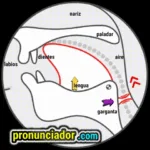
- Mouth: SUPER WIDE OPEN! Drop your jaw way down, like you’re about to say “AHHHH” for the doctor.
- Lips: CHILL & NEUTRAL. Relaxed, unrounded.
- Tongue: LOW & FLAT, toward the BACK. Let your tongue rest low and flat on the floor of your mouth, maybe pulled back a bit. The tip can be behind your bottom front teeth.
Make this “AHHH” sound first.
Step 2: The Quick Up-Slide to “IHH”! (The /ɪ/ Vowel – Like “Kid” or “Sit”)
NOW, from that wide open “AHHH” /ɑ/, you glide to the Short I /ɪ/.
- KEEP YOUR VOICE GOING! Don’t stop the sound.
- Jaw RISES (Mouth Closes Partially): Smoothly bring your jaw UP, so your mouth goes from wide open to only SLIGHTLY open.
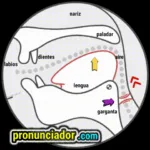
- Tongue GLIDES UP & FORWARD! As your jaw rises, the FRONT of your tongue moves UP high in your mouth and FORWARD, toward your upper front teeth (aiming for the /ɪ/ “sit” vowel position).
- Lips STRETCH SLIGHTLY (Tiny Relaxed Smile): As you make the /ɪ/, your lips, which were neutral, will naturally spread just a little bit to the sides, very gently.
You’ve just made the /aɪ/ “EYE” diphthong! AHHH→IHH!
Step 3: The American “RRR” Grand Finale! (The /r/ Consonant – With ROUND LIPS!)
FINALLY, from that high/front “IHH” /ɪ/ position, without pausing, glide right into the American R.
- Lips ROUND! This is a key change from the /ɪ/ position. As you transition into the R, your lips should come together and GENTLY ROUND.
- Tongue TENSES & MOVES TO “R” MODE! Your tongue (already high from /ɪ/) now tenses and does its American R magic:
- Retroflex R (Tip CURLED): The TENSE tip curls UP & BACK (not touching!).
- Bunched R (Body HUMPED): Tip down, TENSE body of tongue PULLS/BUNCHES UP & BACK.
- Reminder: TENSE tongue, NO taps/trills, air flows smoothly for “RRRR”.
Step 4: The Smooth Triple-Blend! “AHH-IHH-RRR!” = /aɪr/ “FIRE!”
The /aɪr/ sound is ONE continuous, flowing triple-glide! Your mouth is always in motion.
- Start with the big, open, neutral-lipped “AHHHH” (/ɑ/).
- Glide smoothly, jaw rising, tongue coming up/forward, lips slightly spreading to “IHHH” (/ɪ/).
- Instantly glide from “IHHH,” rounding your lips and tensing/moving your tongue into your American R position, to make the “RRRRR” (/r/).
The whole journey is: “Aaaaaaaahhhhhh-iiiiiiihhhhh-RRRRRRRRR” –> /aɪr/ –> The “IRE” sound in “fIRE“!
Important Note on Length/Stress (Diphthong Principle):
The very first part of this triple glide, the “AHH” /ɑ/ of the initial /aɪ/ diphthong, is generally louder and longer than the “IHH” /ɪ/ it glides to, or the final “RRR” /r/ coloring. The “AHH” kicks it off strongly!
Kid-Friendly “FIRE!” Cue: “Imagine you’re surprised by a big “AHHH!” (mouth wide!). Then you quickly point “IH!” (mouth closing, tongue up front). Then you see it’s a friendly dragon who goes “RRRRR!” (lips round, tongue pulls back). All together super fast: AHH-IH-RRR! That’s “FIRE!” “
Feeling Check: Big jaw drop for “AH”? Jaw closes & tongue rises/fronts for “IH”? Then lips round & tongue tenses/pulls back for “RRR”? Is it one SMOOTH movement? You’re a /aɪr/ superstar!
Spelling “IRE” /aɪr/: More Predictable Than You Think! (Mostly!)
Okay, after the chaos of some other vowel spellings, the /aɪr/ sound is a bit kinder, though it still has its disguises! The primary source page for “/aɪr/ as in fire” (web version from previous user input) presents a pie chart with ‘IR’ as 91% which is highly unusual if it refers to ALL /aɪr/ words generally (since ‘fire’ itself isn’t IR).
However, after deeper analysis of the video (where an on-screen list of 40 words for /aɪr/ is shown from 0:59 to 8:38 – user would see “Video R-colored vowel /aɪr/” on this list, then words like “acquire”, “admire”, “conspire”, “desire”, “dire”, “empire”, “entire”, “expire”, “fireplace”, “firewall”, “hire”, “inquire”, “inspire”, “require”, “retire”, “squire”, “tire”, “vampire”, “wire”).
And the updated web spelling chart, it’s clear there’s complexity.
Let’s simplify based on common, reliable patterns:
#1: The Classic “-IRE” Ending! (VERY COMMON & RELIABLE)
This is your number one BEST FRIEND for spotting the /aɪr/ sound! When a word ends in -IRE (with a silent ‘e’), it almost always makes the “AHH-IHH-RRR” /aɪr/ sound.
- fire /faɪr/
- hire /haɪr/
- tire /taɪr/ (neumático; cansar)
- wire /waɪr/
- admire /ædˈmaɪr/
- desire /dɪˈzaɪr/
- entire /ɪnˈtaɪr/
- expire /ɪkˈspaɪr/
- inspire /ɪnˈspaɪr/
- require /rɪˈkwaɪr/
- retire /rɪˈtaɪr/
- conspire /kənˈspaɪr/
- empire /ˈɛmpaɪr/
- vampire /ˈvæmpaɪr/
- attire /əˈtaɪr/
- squire /skwaɪr/
- dire /daɪr/
Pattern: Stressed Vowel + R + Silent E = often that vowel + /r/. For “I” before R+E, it becomes the /aɪr/ triphthong.
#2: The “-YER” Suffix (When ‘Y’ comes from ‘FLY’ → ‘FLYER’)
When you have a verb ending in ‘-y’ (that makes the Long I /aɪ/ sound, like “fly” /flaɪ/) and you add “-ER” to make a noun, that “-YER” often creates the /aɪr/ sound.
- fly /flaɪ/ → flyer /ˈflaɪər/
- dry /draɪ/ → dryer /ˈdraɪər/
- (Less common) ply /plaɪ/ → pliers /ˈplaɪərz/ (usually plural, -IER here)
#3: The “-IAR” Suffix (When ‘IE’ comes from ‘LIE’ → ‘LIAR’)
Similarly, verbs ending in “-ie” (making /aɪ/ sound, like “lie” /laɪ/) that add an “-AR” suffix.
- lie /laɪ/ → liar /ˈlaɪər/
- (Less common) tie /taɪ/ → tiara* /tiˈɑrə/ or /tiˈærə/ – This isn’t a direct “tier” suffix, complex word, may not always fit /aɪr/ for all speakers.
#4: The Stressed ‘-IR’ (Sometimes! Tricky!)
This is where it gets less predictable, as ‘IR’ is MOSTLY the /ɝ/ sound (bird, first). BUT, in a few stressed instances, ‘IR’ can sound like /aɪr/.
- siren /ˈsaɪrən/
- virus /ˈvaɪrəs/
- Iris /ˈaɪrəs/ (the flower or eye part)
- Pirate* /ˈpaɪrət/ (the /rət/ is unstressed and more like /rət/ or /rɪt/ with a very reduced vowel, but the ‘pi’ could carry the /aɪ/ before R) – Often simplified for learners as having an /aɪr/-like quality in its first syllable before the very weak second.
#5: The “-IER” Suffix (As in ‘IDENTIFIER’)
When a base word ending in ‘Y’ (like ‘identify’ /aɪˈdɛntɪfaɪ/) takes an ‘-ER’ suffix, the ‘Y’ can change to ‘I’, resulting in ‘-IFIER’ pronounced /aɪər/.
- identify /aɪˈdɛntɪfaɪ/ → identifier /aɪˈdɛntəˌfaɪər/
- magnify → magnifier
- modify → modifier
- multiply → multiplier
- purify → purifier
- qualify → qualifier
Simplified /aɪr/ “FIRE” Spelling – Main Clues:
| Spelling | Commonality | Strong Clue for /aɪr/? | Key Examples | Watch Out! |
| -IRE | Very Common | YES! Your BEST BET! | fire, hire, tire, wire, desire | (Very reliable) |
| -YER (suffix) | Common | YES, if from verb in -y (/aɪ/) + ER | flyer, dryer | ‘prayer’ /prɛr/ (from pray /preɪ/)! |
| -IAR (suffix) | Less Common | YES, if from verb in -ie (/aɪ/) + AR | liar spezificher ist | ‘familiar’ /fəˈmɪljər/ |
| Stressed -IR | Rare | RARELY /aɪr/! Specific words to learn. | siren, virus, Iris | IR is almost always /ɝ/ (bird)! |
| -IFIER (suffix) | Common | YES, if from verb in -ify + ER | identifier, modifier |
GOLDEN RULE: ‘-IRE’ ending is your go-to for /aɪr/. ‘-YER’ and ‘-IAR’ derived from /aɪ/-verbs are good clues too. Stressed ‘IR’ as /aɪr/ is uncommon. Always trust your ear and an IPA dictionary when in doubt!

Uh-Oh! Common “FIRE” /aɪr/ Blunders & How to Extinguish Them!
Where do learners often get burned by this “AHH-IHH-RRR” triple-glide?
- MISTAKE #1: SKIPPING THE “IHH” /ɪ/ GLIDE! (Making /ɑr/ – “far” – Instead of /aɪr/ “fire”!)
- The Burn: This is huge. You go from the open “AHH” /ɑ/ straight to the “RRR” /r/, completely missing the crucial upward/forward tongue/jaw movement to “IHH” /ɪ/. Your “fire” sounds like “far.” “Tire” sounds like “tar.”
- THE FIX: TWO-PART START, THEN R! Think: “EYE” (/aɪ/) + “RRR” (/r/). First, PERFECT your /aɪ/ “EYE” diphthong (AHH→IHH). THEN, smoothly blend that entire /aɪ/ glide into your American R. It’s /aɪ/ followed by /r/-coloring. AHH → IHH … RRR!
- MISTAKE #2: WRONG AMERICAN “R” (The Usual Suspect: Taps, Trills, Weak R, Dropped R).
- The Problem: Any R that isn’t the smooth, continuous, tense American R (retroflex or bunched) will make your /aɪr/ sound off.
- THE FIX: DEDICATED AMERICAN R PRACTICE! For the R in /aɪr/: Lips GENTLY ROUND for this R-part only. Tongue TENSE & CURLED or BUNCHED. No taps, no trills. (Review ANY guide on just the American /r/ consonant if needed!).
- MISTAKE #3: Wrong STARTING Vowel for the /aɪ/ Part (Not an OPEN, LOW, BACK/CENTRAL “AHH” /ɑ/).
- The Issue: If your initial /ɑ/ isn’t wide open and low/back enough (e.g., you use an /æ/ “cat” sound or an /ɛ/ “bed” sound), the whole triphthong foundation is wrong.
- The Solution: “DOCTOR’S AHHH!” Drop that jaw wide for the starting /ɑ/. Tongue low and relaxed in the back/center. Lips neutral at the very start.
- MISTAKE #4: CHOPPY GLIDES (AH… IH… RRR) – No Smoothness!
- The Problem: Three distinct, separated sounds instead of one flowing unit.
- The Fix: ONE FLUID MOUTH MOVIE! Your mouth is in constant, smooth motion from /ɑ/ through /ɪ/ and right into /r/. Think of it like drawing a single curvy line with your voice.
- MISTAKE #5: Not Rounding Lips for the FINAL /r/ Component.
- The Glitch: The /aɪ/ (“eye”) part is unrounded. But for the American /r/ to get its characteristic sound, lips usually need to come slightly forward and round. If they stay spread/neutral, the R can sound weak or off.
- The Fix: AHH (neutral lips) → IHH (slightly spread lips) → RRR (GENTLY ROUNDED lips)! Feel that final rounding happen.
“You’re Fired Up!” /aɪr/ Practice Time!
Let’s forge that perfect “AHH-IHH-RRR” glide!
Exercise 1: Deconstruct & Reconstruct – /ɑ/ vs /ɪ/ vs /r/ vs /aɪ/ vs /aɪr/
This is key to feel all the parts!
- Just /ɑ/: WIDE “AHHH” (father, spa).
- Just /ɪ/: SHORT “IHH” (kid, sit).
- Just /r/: AMERICAN “RRRR” (run, red – tongue tense, lips round).
- Glide /aɪ/: “EYE” (AHH→IHH smoothly! Like, my, time).
- NOW THE TRIPLE: /aɪ/ + /r/ = /aɪr/: Take your perfect “EYE” /aɪ/ sound and, without pausing, flow it right into your perfect American “RRR” /r/ sound! → “EYE-RRRRR!” → “FIRE!” /faɪr/!
Exercise 2: Minimal Pair Power! /aɪr/ vs /ɑr/ (Glide vs. No “Ih” Glide)
Listen for that “IH” part in /aɪr/!
- Fire /faɪr/ (AH-IH-R) — Far /fɑr/ (AH-R)
- Tire /taɪr/ — Tar /tɑr/ (alquitrán)
- Wire /waɪr/ — War* /wɔr/ (TRICKY! “War” is /ɔr/, not /ɑr/ for contrast here. Better: Wide /waɪd/ — W(R) od? – need better pair)
- Let’s use: Shire (county) /ʃaɪr/ — Shark /ʃɑrk/
- Hire /haɪr/ — Hard /hɑrd/
Exercise 3: Minimal Pair Power 2! /aɪr/ vs /ɪr/ (Open Start vs. High/Front Start)
Feel the WIDE “AH” start for /aɪr/ vs. the HIGH “IH” start for /ɪr/!
- Liar /ˈlaɪər/ (starts /ɑ/) — Leer /lɪr/ (mirada lasciva – starts /ɪ/)
- Fire /faɪr/ — Fear /fɪr/
- Mire (pantano) /maɪr/ — Mere /mɪr/ (mero)
- (Virus /ˈvaɪrəs/ vs. Veer /vɪr/ (cambiar de rumbo)
Exercise 4: Spell Check – Nail Words with Tricky Spellings for /aɪr/
Practice making the SAME AHH-IHH-RRR glide for these!
- -IRE: fire, hire, tire, wire, desire, entire, admire, retire, empire, inspire, require, squire, conspire, attire.
- -YER (from -Y verbs): flyer, dryer, supplier. (And related -IER like modifier, identifier from ‘identify’ ends in /aɪ/).
- -IAR (from -IE verbs): liar. (And ‘briar’, ‘friar’).
- Stressed -IR (Uncommon but real!): siren, virus, Iris. (Vampire also listed as -IR by source pie, but it’s -IRE).
- Other: choir /kwaɪər/. (Though /kwɑɪɚ/ is also a common pronunciation, often reduced.)
Exercise 5: The Source’s Top 30 “FIRE” /aɪr/ Workout
| PHONETICAL PRONUNCIATION |
| PHONETICAL PRONUNCIATION |
- Big “AHH” (/ɑ/) start: WIDE jaw, NEUTRAL lips, tongue LOW/BACK.
- Quick glide to “IHH” (/ɪ/): Jaw CLOSES some, tongue MOVES UP/FORWARD, lips slightly SPREAD.
- Instant SMOOTH glide to “RRR” (/r/): Lips GENTLY ROUND, tongue TENSES (curled/bunched).
- Make it ONE fluid AHH-IHH-RRR!
RECORD YOURSELF! This is complex. Be patient!
Exercise 6: “Higher, Higher, Through the Fire!” – /aɪr/ Sentences!
Let’s use /aɪr/ in full sentences! Record and check your triple-glides!
- “The entire [aɪr] empire [aɪr] is on fire [aɪr]!”
- “I admire [aɪr] your desire [aɪr] to require [aɪr] a hire [aɪr] car.”
- “The liar [aɪr] and the flyer [aɪr] conspire [aɪr] by the wire [aɪr].”
- “Retirement for the old squire [aɪr] is no longer a dire [aɪr] requirement [aɪə].” (Requirement can be tricky if rushed, first R is /kwɑɪə/ glide for ‘qui’ part).
- “The virus [aɪr] makes the siren [aɪr] sound for the tired [aɪr] chóir [aɪr].” (Tired and choir are great examples here!).
FAQs: Your American “FIRE” /aɪr/ Sound Questions Answered!
Q1: What exactly IS the /aɪr/ “FIRE” sound, in kid terms?
It’s like your mouth is going on a super-fast three-part adventure!
- Start with a big “AHHH!” (like you’re amazed – /ɑ/).
- Quickly slide up to a little “IHH!” (like in “itchy” – /ɪ/).
- Then, without stopping, end with an American “RRRR!” (like a pirate, but a friendly one, tongue tense, lips round – /r/).
AHH → IHH → RRR = /aɪr/ (“FIRE”)! All in one smooth go!
Q2: My “fire” sounds like “far” (/fɑr/) or “fear” (/fɪr/). What’s the #1 mistake?
You’re MISSING ONE PART of the AHH-IHH-RRR glide!
- If it sounds like “far” (/fɑr/), you SKIPPED the “IHH” /ɪ/ part. You went AHH→RRR.
- If it sounds like “fear” (/fɪr/), you SKIPPED the starting “AHH” /ɑ/ part. You went IHH→RRR.
THE FIX: Make sure you hit ALL THREE positions: Start WIDE OPEN “AHH” (/ɑ/), then glide JAW UP/TONGUE UP-FORWARD for “IHH” (/ɪ/), THEN smoothly into the American “RRR” (/r/) with lips rounding.
Q3: The American “R” at the end is so hard! Any quick tips for the R in /aɪr/?
Yes! After you make the “AHH→IHH” (/aɪ/) glide:
- Your lips, which were neutral or slightly spread for /aɪ/, should GENTLY ROUND as you move into the /r/.
- Your TONGUE TENSES.
- It EITHER CURLS its tip UP and BACK (not touching anything!) OR the BODY of your tongue BUNCHES UP and BACK.
- It’s a CONTINUOUS “RRR” sound, no tapping or trilling.
Keep that tongue TENSE for the R!
Q4: Why do spellings like ‘-IRE’, ‘-YER’, ‘-IAR’, and even ‘-IR’ (sometimes) all sound like /aɪr/?
English spelling is a wild history lesson!
- -IRE (fire, hire, tire) is the MOST common and reliable. The silent ‘e’ makes the ‘I’ long (/aɪ/), then add R.
- -YER (flyer, dryer) and -IAR (liar) often happen when you add ‘-er’ or ‘-ar’ to a verb that already ends in an /aɪ/ sound (fly /flaɪ/, lie /laɪ/).
- Stressed -IR making /aɪr/ (siren, virus) is less common than ‘IR’ making /ɝ/ (bird), so learn these as special cases.
The key is that the /aɪ/ “EYE” diphthong sound comes before the R-coloring.
Q5: Do I say the three parts of /aɪr/ (/ɑ/ + /ɪ/ + /r/) equally long?
No! Think of the /aɪ/ diphthong part first. In /aɪ/ (“eye”), the “AHH” (/ɑ/) part is LOUDER and a bit LONGER than the “IHH” (/ɪ/) part. THEN, you blend this whole /aɪ/ smoothly into the /r/. So, it’s like: AAAHH-ih-rrr. The main energy is on that initial open AHH. The IHH and RRR are the quick, smooth finish.
Final Insights: Your American /aɪr/ Will Be Blazing!
Spectacular! You’ve faced the R-Colored Triphthong /aɪr/ and you now have the tools to master its complex AHH→IHH→RRR glide! This sound, common in “fire,” “hire,” and “tire,” will add amazing authenticity to your American English.
Lock these “fiery” points in:
- /aɪr/ = AHH (/ɑ/) → IHH (/ɪ/) → RRR (/r/)! A THREE-part smooth glide.
- The FULL /aɪ/ (“EYE”) Glide is CRUCIAL First: Jaw WIDE OPEN (/ɑ/) → Jaw CLOSES, Tongue UP/FRONT (/ɪ/).
- THEN Blend to AMERICAN R (/r/): Lips GENTLY ROUND, Tongue TENSE (Curled or Bunched). NO TAPS/TRILLS.
- SPELLING: -IRE is KING! -YER / -IAR (from verbs) are next. Stressed -IR is rare (siren).
- #1 MISTAKE = Skipping the “IHH” /ɪ/ part (sounding like /ɑr/ “far”). #2 = Wrong R!
Focus on that complete “AHH-IHH” slide before you smoothly transition into the American R. Practice words slowly, then speed up. Record yourself often! Your pronunciation of “desire,” “entire,” “inspire,” and “require” will truly shine /ʃaɪn/! (Oops, that’s just /aɪ/! 😉 You get the idea!). Keep up the fantastic work!
👇🔥👇🔥👇🔥👇🔥👇🔥👇🔥
👉 RETURNS in the YEAR 2031 ! WHO? CLICK HERE ! 🔥



👇🔥👇🔥👇🔥👇🔥👇🔥👇🔥
👉 RETURNS in the YEAR 2031 ! WHO? CLICK HERE ! 🔥
👇🔥👇🔥👇🔥👇🔥👇🔥👇🔥
👉 RETURNS in the YEAR 2031 ! WHO? CLICK HERE ! 🔥
👉 RETURNS in the YEAR 2031 ! WHO? CLICK HERE ! 🔥
👉 RETURNS in the YEAR 2031 ! WHO? CLICK HERE ! 🔥