

El Operador Estructural del Inglés
1.1 El Cambio de Chip respecto al Español
En español, transformar una afirmación en pregunta o negación es sumamente simple: basta con agregar la palabra “no” antes del verbo (“No necesito información”) o modificar la entonación (“¿Necesitas información?”). El verbo principal se encarga de todo el trabajo.
En inglés, el verbo principal no puede negar ni preguntar por sí solo. Requiere obligatoriamente la presencia de un verbo auxiliar que asuma la carga del tiempo gramatical y la intención.
1.2 La Regla de Oro del Verbo Principal
El uso de un auxiliar desbloquea una de las mayores simplificaciones del idioma:
Cuando un verbo auxiliar entra en la oración, el verbo principal regresa a su forma base (infinitivo sin cambiar) y NUNCA se conjuga.
🎧 Traductor y Karaoke de Canciones
Buscando el audio exacto, portada y letra...
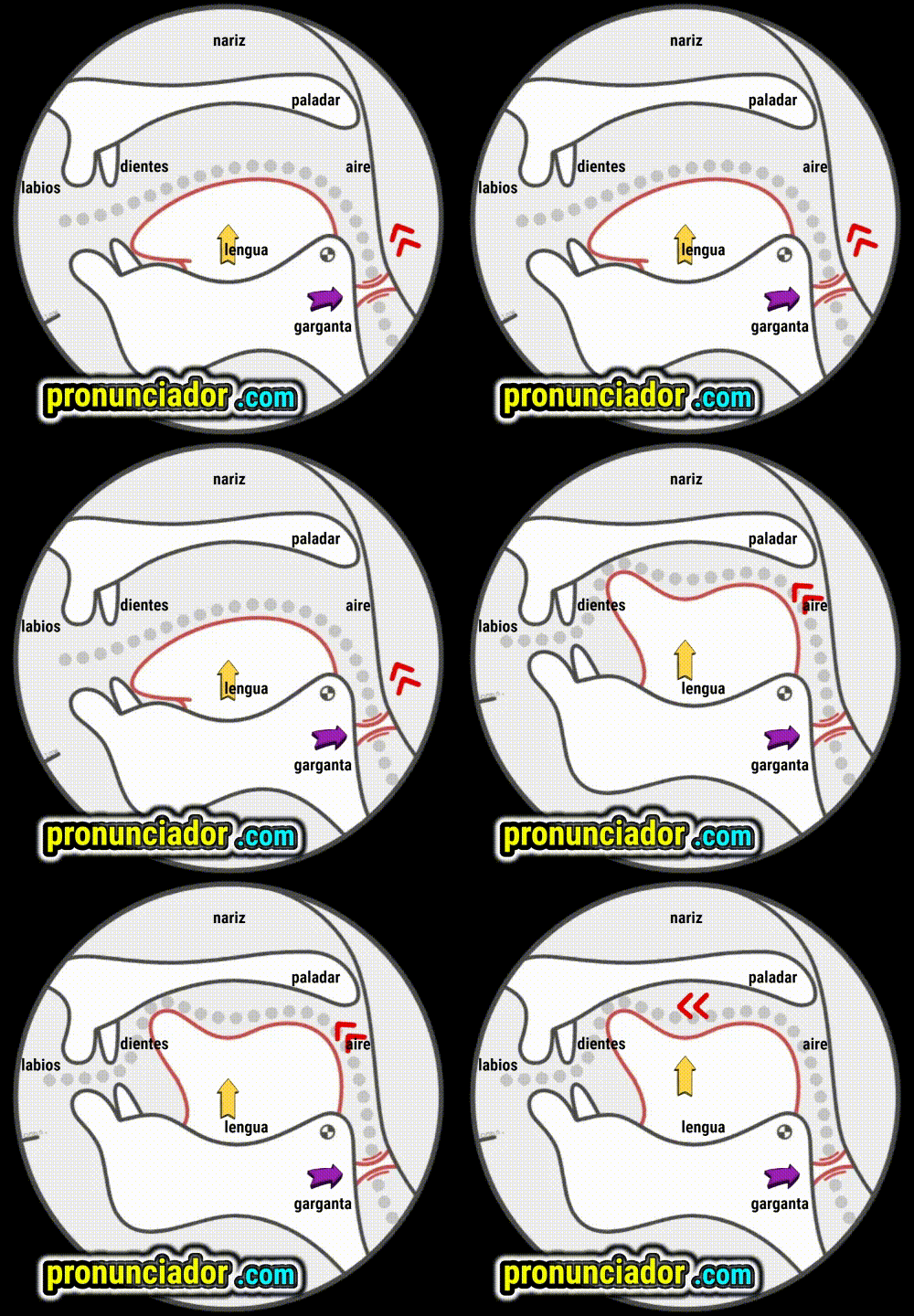
¿Conoces todos los sonidos del inglés? ¡Aprende a pronunciarlos correctamente!
👇 Elige un sonido y practica con ejemplos reales en audio y video 👇


El Mapa de los 4 Auxiliares Clave
Para dominar las estructuras de comunicación cotidiana solo necesitas cuatro operadores principales:
====================================================================
               LOS 4 AUXILIARES FUNDAMENTALES
====================================================================
  DO    -->  Presente (I, You, We, They)
  DOES  -->  Presente (He, She, It)
  DID   -->  Pasado (Para todos los pronombres)
  WILL  -->  Futuro (Para todos los pronombres)
====================================================================
Los Conectores Mágicos – Cómo Unir Ideas y Extender Conversaciones

La Letra “E” – La Reina de las Vocales y sus 5 Reglas de Oro
Desglose Estructural: Negaciones y Preguntas (Nivel Micro)
3.1 La Estructura de la Negación
Fórmula: Sujeto + Auxiliar + NOT + Verbo Base + Complemento
- Presente: I do not (don’t) need protection. / She does not (doesn’t) need activity.
- Pasado: We did not (didn’t) process the information.
- Futuro: They will not (won’t) accept the option.
3.2 La Estructura de la Pregunta
Fórmula: Auxiliar + Sujeto + Verbo Base + Complemento?
- Presente: Do you need information? / Does she want protection?
- Pasado: Did they approve the plan?
- Futuro: Will you process the document?

Cuadro Síntesis Técnica: Matriz de Auxiliares
| Auxiliar | Tiempo Gramatical | Forma Negativa (Contracción) | Ejemplo de Pregunta | Ejemplo de Negación |
| Do | Presente (I, You, We, They) | Don’t | Do you accept? | I don’t accept. |
| Does | Presente (He, She, It) | Doesn’t | Does it work? | It doesn’t work. |
| Did | Pasado (Todos) | Didn’t | Did you complete it? | I didn’t complete it. |
| Will | Futuro (Todos) | Won’t | Will they arrive? | They won’t arrive. |

Guía de Ejecución Práctica del Estudiante (Paso a Paso)
- Identificar el tiempo y el sujeto: Determinar si la idea ocurre en presente, pasado o futuro, y quién realiza la acción.
- Seleccionar el auxiliar: Elegir entre Do, Does, Did o Will.
- Posicionar el auxiliar:
- Colocarlo antes del sujeto si vas a preguntar.
- Colocarlo después del sujeto + NOT si vas a negar.
- Mantener el verbo principal intacto: Escribir el verbo principal en su forma simple, sin conjugaciones ni cambios.





| Flowers | Miley Cyrus | flauærz | maili sairæs |
| PRONUNCIACION ESCRITA SIMPLIFICADA | |
| [Verse 1] | [værrs 1] |
| We were good, we were gold | wi wær gud, wi wær gould |
| Kinda dream that can’t be sold | kindæ drim Dsæt kant bi sould |
| We were right ‘til we weren’t | wi wær rait til wi wærrænt |
| Built a home and watched it burn | bilt æ joum ænd wacht it bærrn |
| [Pre-Chorus] | [pri-koræs] |
| Mm, I didn’t wanna leave you, I didn’t wanna lie | Mm, ai didænt wanæ liv iu, ai didænt wanæ lai |
| Started to cry, but then remembered I | startæd tæ krai, bæt Dsen rimembærd ai |
| [Chorus] | [koræs] |
| I can buy myself flowers | ai kæn bai maiself flauærz |
| Write my name in the sand | rait mai neim in Dsæ sand |
| Talk to myself for hours | tok tæ maiself fær auærz |
| Say things you don’t understand | sei Tsingz iu dount andærstand |
| I can take myself dancing | ai kæn teik maiself dansing |
| And I can hold my own hand | ænd ai kæn jould mai oun jand |
| Yeah, I can love me better than you can | ia, ai kæn lav mi betær Dsæn iu kan |
| [Post-Chorus] | [poust-koræs] |
| Can love me better, I can love me better, baby | kæn lav mi betær, ai kæn lav mi betær, beibi |
| Can love me better, I can love me better, baby | kæn lav mi betær, ai kæn lav mi betær, beibi |
| [Verse 2] | [værrs 2] |
| Paint my nails cherry-red | peint mai neilz cheri-red |
| Match the roses that you left | mach Dsæ rouziz Dsæt iu left |
| No remorse, no regret | nou rimors, nou rægret |
| I forgive every word you said | ai færguiv eværi wærrd iu sed |
| [Pre-Chorus] | [pri-koræs] |
| Ooh, I didn’t wanna leave you, baby, I didn’t wanna fight | u, ai didænt wanæ liv iu, beibi, ai didænt wanæ fait |
| Started to cry, but then remembered I | startæd tæ krai, bæt Dsen rimembærd ai |
| [Chorus] | [koræs] |
| I can buy myself flowers | ai kæn bai maiself flauærz |
| Write my name in the sand | rait mai neim in Dsæ sand |
| Talk to myself for hours, yeah | tok tæ maiself fær auærz, ia |
| Say things you don’t understand | sei Tsingz iu dount andærstand |
| I can take myself dancing, yeah | ai kæn teik maiself dansing, ia |
| I can hold my own hand | ai kæn jould mai oun jand |
| Yeah, I can love me better than you can | ia, ai kæn lav mi betær Dsæn iu kan |
| [Post-Chorus] | [poust-koræs] |
| Can love me better, I can love me better, baby | kæn lav mi betær, ai kæn lav mi betær, beibi |
| Can love me better, I can love me better, baby | kæn lav mi betær, ai kæn lav mi betær, beibi |
| Can love me better, I can love me better, baby | kæn lav mi betær, ai kæn lav mi betær, beibi |
| Can love me better, I (Ooh, I) | kæn lav mi betær, ai (u, ai) |
| [Bridge] | [bridll] |
| I didn’t wanna leave you, I didn’t wanna fight | ai didænt wanæ liv iu, ai didænt wanæ fait |
| Started to cry, but then remembered I | startæd tæ krai, bæt Dsen rimembærd ai |
| [Chorus] | [koræs] |
| I can buy myself flowers (Uh-huh) | ai kæn bai maiself flauærz (aja) |
| Write my name in the sand | rait mai neim in Dsæ sand |
| Talk to myself for hours (Yeah) | tok tæ maiself fær auærz (ia) |
| Say things you don’t understand (Better than you) | sei Tsingz iu dount andærstand (betær Dsæn iu) |
| I can take myself dancing, yeah | ai kæn teik maiself dansing, ia |
| I can hold my own hand | ai kæn jould mai oun jand |
| Yeah, I can love me better than | ia, ai kæn lav mi betær Dsan |
| Yeah, I can love me better than you can | ia, ai kæn lav mi betær Dsæn iu kan |
| [Post-Chorus] | [poust-koræs] |
| Can love me better, I can love me better, baby (Uh) | kæn lav mi betær, ai kæn lav mi betær, beibi (a) |
| Can love me better, I can love me better, baby (Than you can) | kæn lav mi betær, ai kæn lav mi betær, beibi (Dsæn iu kan) |
| Can love me better, I can love me better, baby | kæn lav mi betær, ai kæn lav mi betær, beibi |
| Can love me better, I | kæn lav mi betær, ai |


Pronunciacion en Ingles Escrita Simplificado, pronunciación en inglés escrita, pronunciacion de textos en inglés, pronunciación de textos en inglés escrita.
httpv://www.youtube.com/playlist?list=PLvVBfQ13NyHS_X9f267i829bepHCspAYQ
httpv://www.youtube.com/playlist?list=PLvVBfQ13NyHTNBi88sWJ4493FPwpeLf4c
httpv://www.youtube.com/playlist?list=PLlhK60B8KaTPgWUe8N3R2M8xENe-NUkH0